For two decades, the U.S. solar module supply chain has navigated more turbulence than nearly any other global market. Yet it remains a key target for overseas companies, enticed by premium U.S. pricing and the prestige of serving the world’s leading economy.
Asia has dominated module supply channels since 2010, but the overseas focus is now shifting toward the Middle East and Africa (MEA). The drivers of this transition can be seen through the lens of ELITE Solar, a prominent U.S. supplier since 2020 that recently set up in Egypt but is still partnering with OCI Holdings on polysilicon and wafer supply from Malaysia and Vietnam.
How did Asia come to dominate the U.S. market? It first starts with Japan.

The Sony blueprint: Japan’s early manufacturing push
Before 2005, the U.S. solar market was a niche, policy-driven space. Growth was largely fueled by state and federal programs, off-grid projects and institutional procurement. At the time, the global solar industry was in its early, high-cost phase, so neither U.S. nor overseas manufacturers had a strong reason to build large-scale domestic production.
However, Japanese manufacturers prioritized the U.S. market, first as a key export opportunity, then for domestic module assembly – overlapping with the introduction of the Energy Policy Act of 2005 (creating the investment tax credit) and the California Solar Initiative in 2006.
This wasn’t a new tactic for Japanese companies. Since the post-war era, Japanese electronics firms had targeted U.S. markets, combining local production with brand awareness. Sony laid the blueprint with its TV assembly plant in San Diego in 1972.
By the early 2000s, companies such as Sharp, Kyocera, Mitsubishi Electric and Sanyo were applying the same playbook to U.S. solar. Sharp and Kyocera emerged as U.S. frontrunners – Sharp with a module assembly plant in Memphis, Tennessee, and Kyocera with a facility in San Diego. The Korean companies were also investing globally, with solar factories in the U.K., Mexico and Czech Republic.
Polysilicon volatility and the Hemlock conflict
The PV industry shifted into a scale-driven phase where Japan’s cost position was undercut by rapidly expanding manufacturers in Taiwan and China. And while the ITC boosted demand in the United States, there was no manufacturing credit to help these Japanese-owned U.S. factories.
Worse still, polysilicon spot prices skyrocketed in 2007, eventually peaking well above $300/kg as industry demand surged in response to new European PV incentives. To secure feedstock, leading module suppliers (most producing wafers and cells) signed long-term agreements with polysilicon suppliers that had traditionally served the semiconductor sector.
These “take-or-pay” contracts would define the PV industry in the late 2000s, with the relationship between Kyocera and Hemlock Semiconductor (primarily owned by Dow Corning) a prime example. Between 2005 and 2008, Kyocera signed multiple agreements with Hemlock to secure polysilicon supply for its global operations.
When polysilicon prices dropped as new capacity came online in China, some Western polysilicon suppliers renegotiated contracts. However, Hemlock was notably resolute in its enforcement against Kyocera, while also somewhat intransigent during case actions with SolarWorld and JA Solar.
Fast-forward to 2025 – Corning acquires JA Solar’s module facility in Phoenix, Arizona, to complement its manufacturing plans in America, starting with Hemlock’s polysilicon.
The domestic void and the rise of imports
This global turmoil forced the exit of major Japanese players from the U.S. solar manufacturing market. Other overseas entities filled the empty space.
A notable example was Suntech’s Goodyear, Arizona, plant – the first major Chinese-owned facility in the United States. Opened in 2010, the factory was shuttered just three years later. This was followed in 2015 by the acquisition of (the “original”) Suniva, a prominent American cell producer, by Shunfeng – owner of Wuxi Suntech – in a bid to secure a U.S. manufacturing base.
Other Chinese players followed a similar path. China Sunergy established a module fab in Sacramento that struggled to achieve scale before its assets were briefly acquired by SPI Energy through its Solar4America subsidiary.
Archive photo of SolarWorld’s Oregon facility.
Two of the industry’s prominent South Korean participants also invested in America at this time. OCI got involved through a U.S. holding entity, establishing Mission Solar in San Antonio, Texas. LG Electronics began production of a module facility in Huntsville, Alabama, in 2019 but closed down operations within three years.
Rounding out this overseas assault on the U.S. market would be incomplete without a mention of German company SolarWorld.
SolarWorld’s U.S. story began in the late 2000s with its Hillsboro, Oregon, facility, quickly becoming the country’s largest integrated silicon-based solar plant. The company led the charge on trade cases against Chinese imports but faced a major setback when its German parent went bankrupt in 2017, forcing the sale of the U.S. operations to SunPower in 2018.
However, with federal incentives remaining fragmented and global manufacturing increasingly concentrated in Asia, these inward investments failed to prevent a deep dependency on imports. Between 2010 and 2025, the U.S. domestic panel supply was largely a void, with First Solar’s thin-film production standing as the only significant American-made exception to the rule.
ELITE Solar: a case study in strategic realignment

Excluding shipments from the major global silicon-based suppliers – Jinko, Trina, Canadian Solar, LONGi and JA Solar – ELITE Solar has been a leading supplier of utility-specific modules from Southeast Asia to the United States since about 2021.
The story of U.S. module imports is often framed around tariffs, but a more insightful approach is to track how overseas companies have adapted global footprints to survive.
ELITE Solar (formerly ET Solar) serves as a definitive case study in this regard. The company has been one of the leading importers of solar modules to the United States in the past few years.
Alongside Imperial Star Solar and New East Solar Energy, ELITE Solar belongs to a small group of overseas entities that have successfully navigated the complexities of U.S. trade regulations. Outside the major global powerhouses of JinkoSolar, JA Solar, Trina Solar, LONGi Green Energy and Canadian Solar, these three companies form a “new wave” of suppliers that have quietly secured meaningful U.S. market presence.
The rise, fall, and rebirth of the ET Solar brand
During a 2010 business trip to Shanghai – as China was taking its first steps into solar – I met with (former) ET Solar personnel at the company’s corporate offices. At the time, ET Solar was one of dozens of entrepreneurial firms founded to capitalize on Europe’s expanding feed-in-tariff schemes. The company was also an early proponent of downstream expansion to ground-mount project development and construction.
In 2013, the company reappeared on my radar during the UK’s first ground-mount growth phase, where its downstream arm, ET Solutions, was acting as an EPC for the likes of Lightsource Renewable Energy (now Lightsource BP).
Seeking further expansion, the company established ET Solar in the United States in 2012. However, by 2017, a shift toward a purely downstream model collided with global policy changes, forcing the U.S. operations into bankruptcy. Shortly after, its Chinese operations were curtailed when the lead shareholder also filed for bankruptcy.
The turning point came in 2018, when a new holding entity controlled by Derek Liu acquired ET Solar, folding it into a Hong Kong-registered vehicle. By 2020, a “new” ET Solar emerged with a focus on international business, marking the start of a third chapter.
The three-pivot strategy: surviving the trade wars
The 2020 iteration of ET Solar began as a specialist cell manufacturer, years after the Dept. of Commerce imposed anti-dumping tariffs on Chinese panels in 2012.
By establishing cell capacity in Vietnam and Cambodia, ET Solar joined a wave of suppliers relocating production to Southeast Asia. The company quickly became a key supplier to regional module assembly hubs, serving major brands such as JA Solar and Seraphim.
By 2021, the company executed its second pivot by moving into module supply through OEM arrangements with other companies in Southeast Asia, now shipping ET-branded modules from Southeast Asia to the United States.
ET Solar quickly gained recognition as a serious contender for utility-scale solar farms in America, securing a high-profile client roster that included Goldman Sachs Asset Management and other major investors in renewables.
In 2023, ET Solar rebranded as ELITE Solar. Another decisive shift occurred in 2024 as the regulatory landscape tightened. The window for shipping America-bound modules using cells produced in Vietnam and Cambodia began to close due to new AD/CVD restrictions.
Most of the companies with capacity in Southeast Asia sought temporary workarounds to sustain module operations in the four targeted countries (Cambodia, Malaysia, Thailand and Vietnam), sourcing cells from elsewhere. However, ELITE Solar shuttered its cell and module activities in Vietnam and Cambodia completely.
ELITE puts South Korea firmly on the global supply-chain stage
The next move for ELITE Solar was more emphatic; relocating cell and module production to Indonesia and Egypt during 2024 and 2025, while modifying the corporate ownership structure of its new wafer facility in Vietnam by enticing South Korea’s OCI Holdings into its new U.S. module supply strategy.
Through these actions, ELITE Solar effectively provided OCI with a masterclass in building a resilient silicon PV supply chain. In a two-step corporate transfer, ELITE Solar’s new wafer facility in Vietnam was absorbed into an OCI-controlled joint venture, with a significant portion of OCI’s polysilicon output reserved for the joint-venture’s wafer production – designed to give ELITE Solar a fully-compliant module offering for the U.S. market from 2026 onward. By housing the majority stake within a Singaporean special purpose vehicle (OCI ONE), OCI appears to have created a legal separation from the broader Southeast Asian manufacturing landscape.
The scale of this achievement cannot be understated. For about 20 years, OCI (formerly DC Chemical) had navigated the same difficult solar path as other South Korean conglomerates (or “chaebols”) such as Hanwha, LG Electronics and Hyundai.
These Korean companies each stepped into the solar sector from different industrial roots – OCI as a specialty chemicals producer, Hanwha as a diversified petrochemicals and industrial conglomerate, LG Electronics as a consumer electronics and appliance entity and Hyundai through energy project diversification.
The result has been a two-decade cycle of industrial challenges, questionable acquisitions and mothballed overseas investments by Hanwha, Hyundai and OCI, with LG Electronics being the first of these chaebols to call time on PV back in 2022.

LG Solar USA in Huntsville, Alabama, before it closed in 2022.
Samsung, the largest chaebol in South Korea, also briefly flirted with CIGS thin-film production, but the operations barely got beyond a pilot line in 2011.
As South Korean firms have struggled to remain relevant, Chinese competition essentially commoditized the market in a more efficient, proactive and coordinated manner.
ELITE Solar’s involvement of OCI Holdings for its new U.S. module supply strategy represents one of the most significant engagements of a South Korean company in the PV supply-chain since the chaebols entered the manufacturing arena and could turn out to be Derek Liu’s most astute move yet.
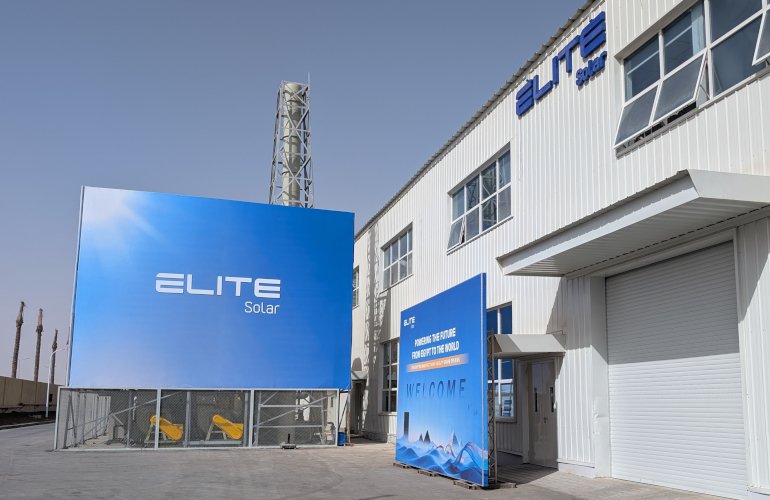
ELITE’s new Egypt operations
Until 10 days ago, there were two things I never imagined doing: standing at the base of the Great Pyramid of Giza and having a guided tour of a 2-GW TOPCon cell line in Egypt. I am not sure which experience surprised me most.
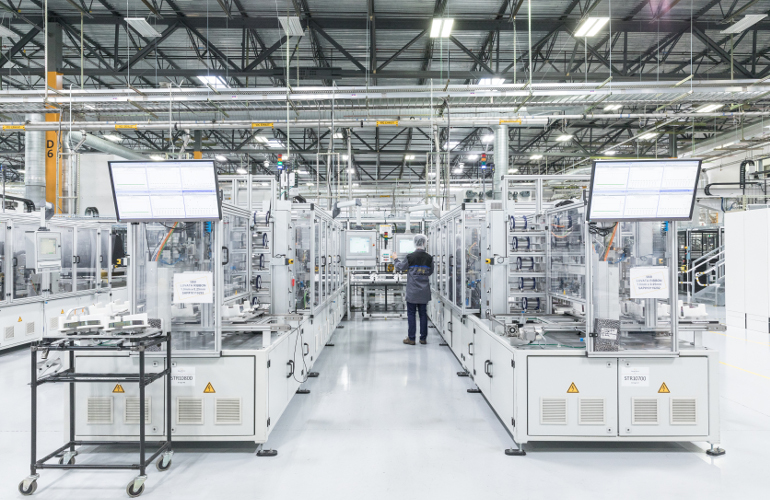
Let’s review ELITE Solar’s new 2-GW cell, 3-GW module fab in Egypt’s Suez Canal Economic Zone (SCZone). Thankfully, the equipment is all “new” – an important point given the history of Southeast Asian production lines moving from one country to another to evade tariffs.

ELITE Solar’s new TOPCon cell lines in Egypt utilize S.C New Energy’s PECVD tools for the poly-Si layer (PE-Poly), with automation provided by Jiangsong. Credit: Finlay Colville
The TOPCon cell lines are largely comprised of new Shenzhen S.C New Energy Technology tools with Jiangsong Science and Technology automation, deploying S.C New Energy’s preferred plasma-enhanced chemical vapor deposition (PECVD) tools for the key TOPCon steps.
The choice of S.C New Energy differs from T1 Energy’s selection of LAPLACE Renewable Energy, presumably utilizing its low pressure chemical vapor deposition (LPCVD) approach to TOPCon.
Over the past few years, S.C New Energy and LAPLACE have become rivals during what has become a defining technical battle of the TOPCon era, with S.C New Energy seeing strong adoption for PECVD in new TOPCon lines – to accomplish tunnel oxide growth, deposition of the poly-Si layer and crystallization/doping – after the use of LPCVD that was championed largely by Jinko.
What next for ELITE Solar?
While ramping up the Egypt facility, ELITE Solar is likely mapping its 2030 trajectory. Several factors will define its role in the industry at this point.
The initial output from the SCZone hub targets ELITE Solar’s U.S. pipeline, yet this cell and module base is a clear stepping stone into the global supply arena. Egypt’s plan to transform from a service economy into an industrial export powerhouse designates ELITE Solar’s factory as a test case for the country’s long-term goals.
Currently, ELITE Solar serves the United States via Egypt and Indonesia. However, an exit from Indonesia is likely already drafted, ending a successful Southeast Asian chapter for cell and module production. Conversely, the association with OCI remains a Southeast Asian anchor, utilizing Malaysian polysilicon and wafers produced in Vietnam. As the strategic “brains” with the end-market connections, ELITE Solar essentially balances OCI’s majority ownership in the wafer JV with its own operational know-how.
OCI’s Malaysian operations – now rebranded as OCI TerraSus – provide one of the few non-Chinese polysilicon offerings. Given the scarcity of “clean” polysilicon feedstock, these Malaysian assets have likely already surfaced as prime acquisition targets.
Another topic relates to U.S. manufacturing. To secure long-term U.S. revenue through 2030, domestic cell and module production is essential to access 45X production credits. In this context, the “availability” of OCI’s Mission Solar module assembly facility in San Antonio, Texas, should be considered. This facility is now almost 12 years old and despite OCI’s intentions to add cell capacity, the Texas operations has generally lacked any strong direction or purpose.
Navigating prohibited foreign entity thresholds remains the final hurdle. Here, ELITE Solar appears to hold a structural advantage: OCI (South Korea) owns 65% of the Vietnam wafer facility via the Singapore-based OCI ONE special purpose vehicle. This ownership level should keep ELITE Solar one step ahead of the trade regulations that many of the company’s competitors have yet to address.