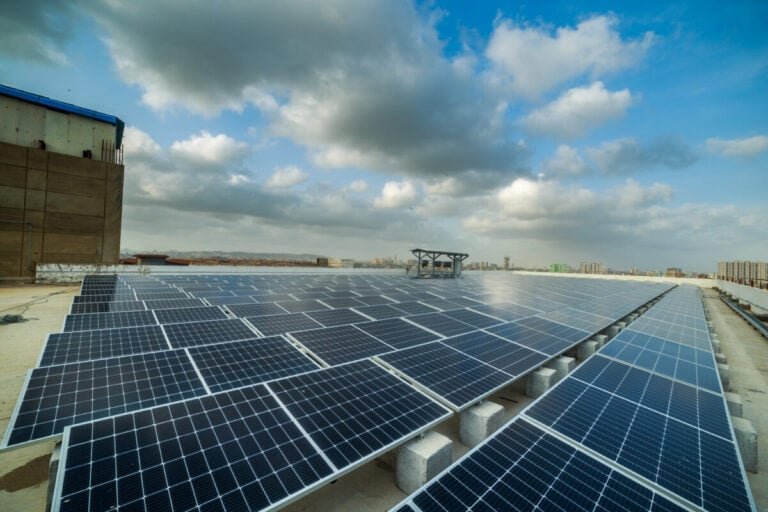
The proposal requires at least 10% equivalent battery storage output to generation capacity. For an initial 400MW auction, therefore, a 10% BESS requirement would correspond to around 40MW/160MWh of energy storage. BESS would charge during high daytime variable renewable energy (VRE) hours and discharge during higher net-demand hours. This would reduce the evening ramp and recover curtailed energy.
ISMO said its modelling of IRRs from solar, wind and co-located renewables with 10%, 20% and 25% BESS showed projects remain feasible and competitive. The first auction tranche had been planned for 200MW, but a doubling of target capacity was approved by the Ministry of Energy’s Power Division in July.
Mandatory BESS is “prudent and proportionate,” according to ISMO, because the increasing share of VRE is already creating duck curve, ramping and curtailment challenges for the grid.
Power sector expert Rehan Javed, among the stakeholders invited to comment, supported the mandatory co-location of BESS with wind and solar project bids, but suggested a higher threshold of 15% to 20% may be more effective in meeting the auction’s aims. The National Energy Academic Network (NEAN) also questioned why the ambition was not higher, given that consultation responses appeared to support a 20% threshold.
The ISMO responded that the 10% threshold is an initial minimum “to secure a substantial part of the modelled benefit without imposing the higher cost and implementation risk associated with a larger requirement.” Its financial model used for calculation would be published as requested by numerous stakeholders, ISMO said, and the threshold may be reviewed at a later date.
The NEPRA determination can be seen here (PDF).
India’s Central Electricity Authority proposes energy storage, grid-forming mandates
India’s Central Electricity Authority (CEA), a statutory body under the Ministry of Power, has proposed mandatory grid-forming inverter capability and co-located energy storage for new renewable energy projects, with the requirements applying to projects commissioned from 1 July 2027.
Under the draft Central Electricity Authority (Technical Standards for Construction of Electric Plants and Electric Lines) 2nd Amendment Regulations, 2026, renewable energy power plants commissioned after that time would be required to have at least 15% of their inverters equipped with grid-forming control.
The draft also proposes that all power conversion systems (PCS) of battery energy storage systems (BESS) have grid-forming control to meet the technical requirements specified under the CEA’s grid connectivity regulations.
For ground-mounted solar and onshore wind projects commissioned after 1 July 2027, the CEA has proposed mandatory co-located energy storage systems (ESS) with a minimum storage duration of two hours and capacity equivalent to at least 10% of the plant’s installed capacity.
A 100MW solar or wind project, for example, would therefore require at least 10MW of co-located ESS with two hours of storage, equivalent to 20MWh.
India story by Shreeyashi Ojha.
To read the full version of the India story, visit PV Tech.