The rest? Capacity charges. Standing fees. Climate change levies. TNUoS. DUoS. BSUoS. An alphabet soup of acronyms that mean something to someone, somewhere, but nothing to the person writing the check.
It’s far less down to hidden transaction fees than businesses realise. Most of those charges are legitimate costs for maintaining the grid, balancing supply, and keeping the lights on. But legitimate doesn’t mean comprehensible.
Energy bills are written in code that only specialists can crack. That’s not transparency – that’s a closed system. And it’s costing businesses more than money. When half your bill is incomprehensible, you can’t manage it. You can’t optimise it. You can’t even know if you’re being overcharged.
You’re just paying it.
The confusion tax
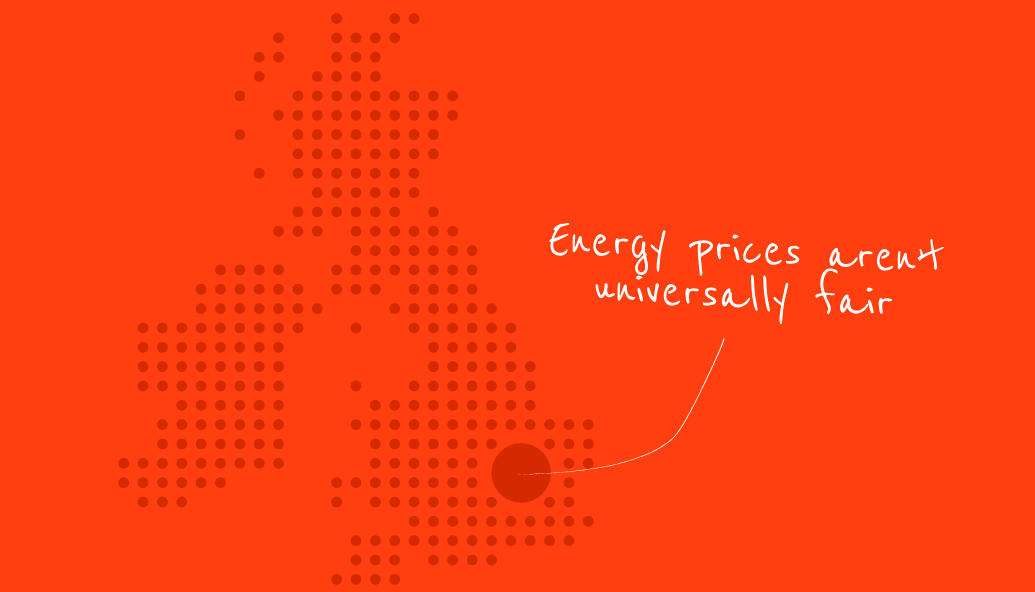
45% of businesses think they’re paying unfair prices for energy.
That’s not paranoia. That’s a reasonable response to opacity. When you don’t understand what you’re paying for, unfairness and complexity feel identical.
This is a market flaw, not a conspiracy. But it’s a flaw that needs fixing. Not by hiding complexity, but by translating it. Every charge explained. Every acronym decoded. Transparency as the default, not the exception.
Among manufacturers – who tend to have larger bills, sharper procurement teams, and more experience negotiating – that number drops to 41%. Which tells you something important: understanding creates trust.
The businesses that comprehend their bills are more likely to believe they’re fair. The businesses that don’t are stuck in permanent suspicion. This is what opacity costs. Not just money – though it costs that too – but the ability to act rationally. Confusion isn’t just frustrating. It’s paralysing.
When you don’t know what’s negotiable, everything feels fixed. When you don’t know what’s excessive, nothing feels unfair enough to challenge. When you don’t know what levers you can pull, you stop reaching for them.
That’s the confusion tax. And SMEs are paying it every month.
What the invisible half actually is
Energy bills are structured for compliance, not clarity. Every charge is listed because regulations require it. Every acronym is there because some policy decision 15 years ago mandated it. None of that is designed to help you understand what you’re actually paying for.
Take capacity charges. Necessary? Yes. The grid needs redundancy to handle peak demand. But does your bill explain that? Does it show you when your business is contributing to peak demand and when it isn’t? Does it give you any levers to shift usage and reduce that cost?
Usually, no.
Or climate change levies. Important? Absolutely. But does your bill show you what that money funds? Does it connect the charge to actual renewable infrastructure or energy efficiency programs? Does it give you any sense that you’re contributing to something, rather than just being charged for something?
Rarely.
The invisible half of your bill isn’t a scam. But it’s treated like background noise instead of actionable information. And that gap – between what’s listed and what’s understood – is where SMEs lose control.
Why this matters now
23% of businesses reduced operations because of rising electricity prices. Not because energy got slightly more expensive. Because it got unpredictably, unmanageably expensive. And when you don’t understand your bill, you can’t see the warning signs. You can’t model scenarios. You can’t plan around volatility.
You just react. And usually, too late.
40% of SMEs now value stable prices over low ones. That’s a fundamental shift. For decades, procurement was about finding the cheapest rate. Now it’s shifting to finding the most predictable one.
But predictability requires visibility. You can’t predict what you can’t see. You can’t plan around charges you don’t understand. And you certainly can’t make informed trade-offs if your bill reads like compliance paperwork instead of a financial document.
Half a bill isn’t good enough anymore. If it ever was.
What clarity actually looks like
Clarity doesn’t mean simplicity. Energy costs are complex because the grid is complex. That’s fine. But complexity can still be comprehensible.
A clear bill doesn’t hide the charges – it explains them. It shows you what you’re paying for energy and what you’re paying for infrastructure. It breaks down what’s variable and what’s fixed. It highlights what’s in your control and what isn’t. It gives you the information you need to act.
That clarity is being built now. Not by regulators mandating disclosure, but by businesses proving that equipped with real information, companies make better decisions, build stronger operations, and trust their suppliers more.
When businesses understand their bills, they make better decisions. They shift usage to off-peak hours. They lock in rates when it makes sense. They invest in efficiency where it actually moves the needle. They stop paying the confusion tax.
Over 3,800 sites are already operating with full transparency. They’re working with companies like tem that explain exactly what they’re paying for, help them understand the trade-offs, and give them visibility into their costs in real time.
That’s not a luxury. That’s the baseline for rational decision-making.
Half a bill isn’t good enough. Not for businesses trying to survive volatility. Not for a market trying to modernise. Not for an energy transition that depends on informed participation.
The invisible half needs to become visible – for the many, not just the few who can afford specialist advisors. And that shift is already in progress, driven not by policy but by businesses and generators demanding clarity.
You can download the full energy report from this link.
Copyright © 2026 Energy Live News LtdELN
Grab the opportunity to progress your Net Zero journey. The Big Zero Show 2026 is for end users responsible for reducing cost, carbon and energy and its mission is to educate and help them progress their Net Zero journey. It will run March 24th at The University of Chicago Booth School of Business.