When moving from small commercial jobs into utility-scale work, it’s important to remember that solar and storage installations are still based in solid electrical work. The size, speed and coordination requirements are on a different level, and success now depends on three things working together.
First, strong technical fundamentals done at a larger scale. Crews need to lay out and connect long runs of site power lines, set and wire major equipment and follow clear safety settings and shutoffs. Adding batteries means planning for cooling, monitoring and emergency systems so everything runs safely and predictably.
Second, project coordination at landscape size. These sites can cover thousands of acres and move through construction in phases. The winning teams plan where every part goes, label everything and keep work areas supplied so crews can keep moving.
Third, materials strategy that is part of the build plan. Choices like inverter type and wire sizes affect cost, availability and installation speed. Partners that can pre-engineer bills of material, pre-pack the right parts for each area of the site and deliver on a schedule matched to the work keep cranes swinging and crews productive.
Lessons learned from utility-scale solar and storage

The Madison Fields Solar Project in Ohio.
Drawing on ULE Group’s experience across many large projects, we’ve distilled five practices that move jobs from the first shovel in the ground to power on time and on budget:
Design for the grid you’re joining. The utility’s requirements set the rules. Align on safety settings, shutoffs, communications and the order of startup steps before construction begins. When everyone builds to the same plan, change orders decrease and “power-on” dates hold firm.
Make repeatable work truly repeatable. Treat the site’s major systems, solar fields, batteries and the equipment that connects them, as standard “kits.” Pre-label parts by area, include the right connectors, labels and hardware, and follow the same quality checks each time. Consistency speeds installation and reduces rework.
Move materials like a flow, not a pile. Break the site into zones and deliver pre-packed kits to each one just as crews need them. Secure long-lead gear early and time deliveries to match civil progress and weather. If conditions change, move the kits and not the whole schedule.
Standardize most of the work, customize the rest. Use a common approach for wire management, labels, quality forms and closeout documents across all sites. Then adjust for local conditions: heat and dust in the desert, storms and humidity in coastal regions, frozen ground up north, or farm access where crops and panels share space. Early check-ins with local officials and neighbors help to keep inspections smooth.
Start “commissioning” on day one and treat paperwork like a deliverable. Plan the testing and startup steps before parts arrive. Use simple checklists, fix issues as you go and do practice runs before utility witnesses arrive. Track serial numbers, store test results and build the turnover package as the job progresses. Stock smart spare-part kits to protect uptime after go-live.
What owners and operators expect next

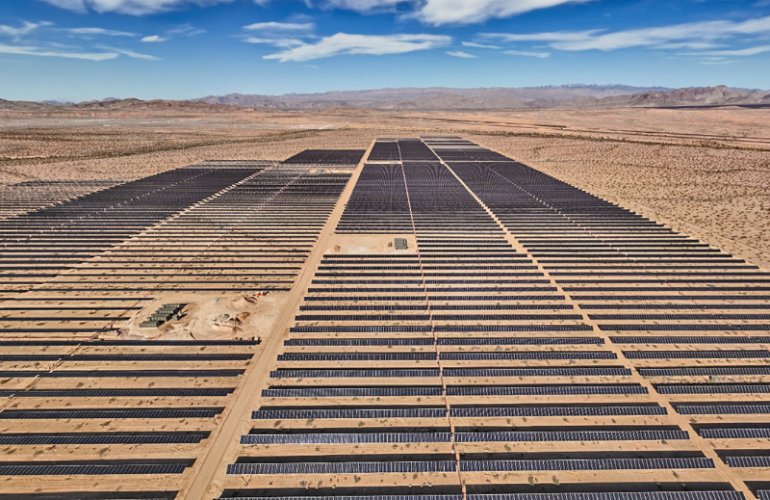
Gemini Solar + Storage project in Nevada.
Owners want projects that do more than make power when the sun is shining. They expect plants to store energy and deliver it when people need it, which is why multi-hour battery systems are quickly becoming standard. The teams that plan for storage from day one avoid last-minute fixes and reach the finish line faster.
Owners value predictability and community care. With key equipment in high demand and utility schedules tight, they prefer partners that lock in transformers and switchgear early, deliver materials in the order crews will use them and keep work moving even when weather throws a curve. They also look for plans that respect local needs — like farm access, dust and noise control and clear coordination with local officials — because good neighbors get faster approvals and smoother operations.
How a supply partner speeds the journey
Plan before you buy. A partner, not just a supplier of parts, helps compare options for equipment types, wire sizes and protection devices so you can balance performance, availability and cost. Early “what-if” planning prevents surprises when lead times shift.
Kit for the way crews actually work. They will build area-by-area bills of material and ship pre-packed kits including, fasteners, labels and connectors, so teams can open a crate and start the task.
Deliver to the rhythm of the site. They can stage regionally and time deliveries to match the build sequence and weather windows with the flexibility to change when plans do.
Support a clean closeout. Finally, they include spare-parts and operations kits and assemble the documentation (test results, cut sheets, labels) owners need, speeding acceptance and protecting uptime.
The road ahead
For contractors looking to step up to larger projects, the playbook is straightforward: build a strong bench that can handle big-site wiring and safe battery work; standardize your installation kit and quality checks so crews can repeat wins; bring procurement into the room early to lock in long-lead gear; and treat testing and paperwork as daily habits, not end-of-project chores. Do those things, and commissioning becomes a steady glide path, not a cliff at the end.
America’s clean-energy buildout is, at heart, an electrical story. Every megawatt that connects and every megawatt-hour that shifts peak demand runs through the hands of contractors, and the materials they install. ULE Group’s move from serving smaller jobs to supporting grid-scale programs illustrates what it takes: clear plans, disciplined execution and suppliers that operate as true build partners.
Contractors that institutionalize those habits, whatever their starting point, will be best positioned to deliver on time, on budget and at the quality the grid demands.
 Danielle Pirrone is the president and chief operating officer of ULE Group, a national leader in electrical, power and lighting distribution. She assumed the role of president in 2025, expanding her leadership to include the company’s overall vision and strategic direction, while continuing to oversee strategic operations. With over 20 years of experience in transportation and distribution operations, Pirrone is a Six Sigma Black Belt known for driving strategic solutions, leading high-performing teams, streamlining processes, and boosting productivity. Since joining ULE Group in 2016 as VP of operations, Pirrone has been a driving force behind the company’s growth, operational excellence, and customer-focused innovation. Promoted to COO in 2018, she has played a key role in strengthening ULE Group’s position as a trusted partner to contractors, developers and facility teams across New York, New Jersey and nationwide.