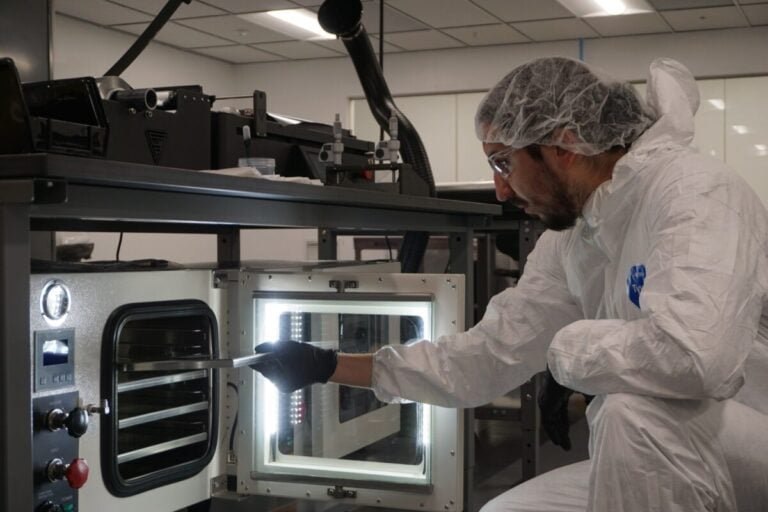
According to a representative from sodium-ion (Na-ion) battery energy storage system (BESS) startup Peak Energy, the company will pilot a 3.1MWh system at energy firm RWE’s Eastern Wisconsin lab in the US.
Speaking to Energy-Storage.news, the representative explained that Peak is in ongoing discussions with RWE to establish the project’s success criteria and timeline, as well as to evaluate a pathway to full commercial development.
Peak’s BESS is designed without moving parts and features active cooling and ventilation. This design, as the company states, minimises the common failure points seen in typical BESS systems.
Lithium-ion (Li-ion) battery cells within BESS require active cooling and ventilation to extend their lifespan and reduce the risk of fires.
This article requires Premium SubscriptionBasic (FREE) Subscription
Already a subscriber? Sign In
Try Premium for just $1
- Full premium access for the first month at only $1
- Converts to an annual rate after 30 days unless cancelled
- Cancel anytime during the trial period
Premium Benefits
- Expert industry analysis and interviews
- Digital access to PV Tech Power journal
- Exclusive event discounts
Or continue reading this article for free
Lower system degradation can decrease the need for upgrades, meaning operators might not need to add extra batteries or components during the project’s lifetime to maintain storage capacity.
The company claims its sodium-ion phosphate pyrophosphate (NFPP) cells reduce the lifetime cost of energy stored by an average of “US$70/kWh, which is equivalent to approximately half of the total price of a battery system today.”
ESN asked for a breakdown of the US$70/kWh cost. Peak responded, “All of the US$70 comes from long-term OpEx savings. Augmentation, auxiliary power, and operations and maintenance, as mentioned. There are also revenue advantages from the flexibility of our performance guarantee, eliminating requirements such as average state of charge (SoC) constraints and allowing for multiple discharges per day, as well as higher system availability.”
Na-ion generally has a lower round-trip efficiency than Li-ion. Peak’s representative said its system’s RTE is “96% at beginning of life, which is similar/better than what you see on the Li-ion side.”
The company also highlights that its BESS can safely operate in a wide range of temperatures, “without a performance decrease.”
Its representative noted to ESN, “Ambient operating range is -40 to 55 °C. We have passive heaters in the system to combat extreme low temperatures, just as Li-ion systems will use heating to keep their systems within their narrow operating temperature bands.”
The company also noted the system’s location in the MISO service area. In 2025, a report from American Clean Power Association (ACP) and Aurora Energy Research stated that MISO will need a 500% rise in battery storage by 2035.
According to the report, the RTO is experiencing increasing load demands that its ageing energy resources cannot support. Due to MISO’s extensive coverage area and limited transmission infrastructure, electricity prices often vary significantly.
It was noted that in summer 2025, MISO’s capacity prices surged by over 2,000%. Without implementing energy storage solutions, models predict that peak electricity prices for consumers will keep rising and become less dependable over time.
The companies will collaborate to develop a storage platform that integrates Peak Energy’s Na-ion batteries with Energy Vault’s proprietary digital stack, emphasising Energy Vault’s AI infrastructure portfolio. They state this strategy accelerates deployment, enhances safety, and reduces costs by eliminating “complex legacy systems.”
In November 2025, Peak announced a multi-year phased agreement with developer Jupiter Power to provide up to 4.75GWh of Na-ion BESS. Under this deal, Peak will supply the BESS to Jupiter Power for deployment from 2027 to 2030. The total contract value could exceed US$500 million.
The Energy Storage Summit USA 2026 will be held from 24-25 March 2026, in Dallas, TX. It features keynote speeches and panel discussions on topics like FEOC challenges, power demand forecasting, and managing the BESS supply chain. ESN Premium subscribers can get an exclusive discount on ticket prices. For complete information, visit the Energy Storage Summit USA website.
The Energy Storage Summit USA is the only place where you are guaranteed to meet all the most important investors, developers, IPPs, RTOs and ISOs, policymakers, utilities, energy buyers, service providers, consultancies and technology providers in one room, to ensure that your deals get done as efficiently as possible. Book your ticket today to join us in 2026!
Held alongside The Battery Show Europe, Energy Storage Summit provides a focused platform to understand the policies, revenue models and deployment conditions shaping Germany’s utility-scale storage boom. With contributions from TSOs, banks, developers and optimisers, the Summit explores regulation, merchant strategies, financing, grid tariffs and project delivery in a market forecast to integrate 24GW of storage by 2037.
You can expect to meet and network with all the key industry players again in 2025 from major US asset owners, operators, RTOs and ISOs, optimizers, software and analytics providers, technical consultancies, O&M technology providers and more.
Launching September 2026 in Berlin, Energy Storage Summit Germany is a new standalone event dedicated to Germany’s energy storage market. Bringing together investors, developers, policymakers, TSOs, manufacturers and optimisation specialists, the Summit explores the regulatory shifts, revenue models, financing strategies and technology innovations shaping large-scale deployment. With Germany targeting 80% renewables by 2030, it offers a focused platform to connect with the decision-makers driving the Energiewende and the future of utility-scale storage.
The Energy Storage Summit Central Eastern Europe is set to return in September 2025 for its third edition, focusing on regional markets and the unique opportunities they present. This event will bring together key stakeholders from across the region to explore the latest trends in energy storage, with a focus on the increasing integration of energy storage into regional grids, evolving government policies, and the growing need for energy security.
Read Next
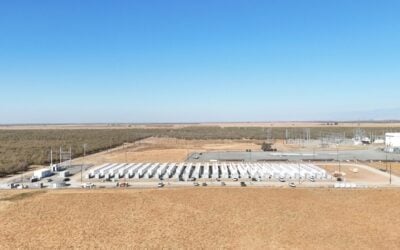
Geothermal and battery storage firm Ormat Technologies’ 80MW/320MWh Shirk battery energy storage system (BESS) in Visalia, California, US, has reached commercial operation.
Hamilton Locke partner Matt Baumgurtel warns of a seismic shift as distributed energy resources with “zero marginal cost” emerge.

New York, US is leading the country in battery energy storage system (BESS) moratoriums, with 97 moratoriums in place, according to renewables service provider Carina Energy.
Google has finalised its acquisition of US renewable energy developer Intersect Power, as part of its plan to power its data centre expansions in the US.
Iron flow battery company ESS Tech Inc highlighted its recent partnership with Google and the acquisition of VoltStorage GmbH, as profitability remained out of reach in 2025.