The project, in the Bahian municipality Uibai, will enable electricity to be stored and delivered to the grid when required in the system’s lithium-ion (Li-ion) batteries, using a 2.3MW power conversion system (PCS) with an inverter output voltage of 0.60kV.
ANEEL noted that the BESS will charge not only from power generated by Sol de Brotas 7, but also from the grid and therefore other generation facilities in the area, including wind as well as solar.
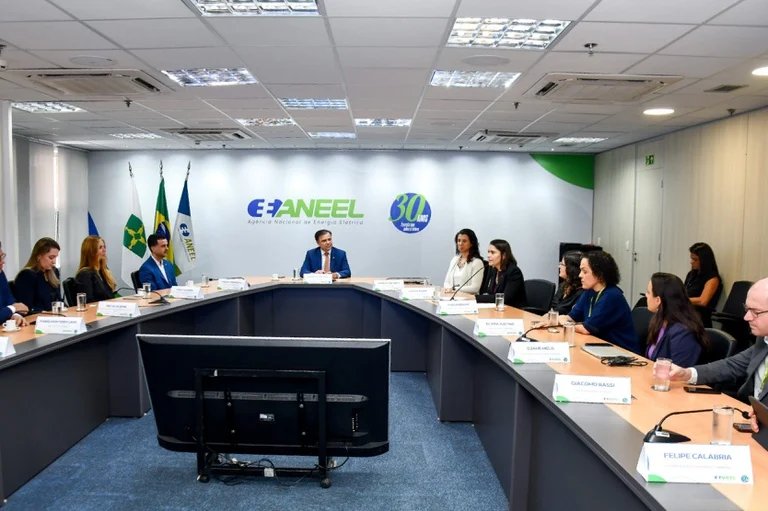
ANEEL director-general Sandoval Feitosa described the “moment of great joy” at the agency having “fulfilled our mission,” calling batteries a medium- and short-term solution to the problem of integrating variable renewable energy (VRE) sources to the grid. This problem “will intensify over time,” Feitosa said, considering Brazil’s “vigorous growth of renewables.”
ANEEL delays could cause ‘irreparable harm,’ trade association chief says
However, the regulatory treatment of energy storage in Brazil is currently in a state of limbo. While Sandoval Feitosa spoke of the need for a regulatory framework that provides security for investors, the project was only able to be approved due to its co-location with a generation plant and considered under those applicable, existing regulations.
ANEEL has been considering the regulatory definition and treatment of energy storage facilities since it began analysis in 2019. In 2022, the regulator published a technical note which proposed creating specific rules that recognised the technical and economic characteristics of storage within the network.
While public consultations have since taken place, and Brazil’s first 30MW/60MWh standalone BESS pilot project was inaugurated in late 2022 by transmission system operator (TSO) ISA CTEEP, deliberation on proposed regulations stalled this month.
On 7 April, debate resumed following the proposals reintroduction in March. This was prompted by a request for review of the proceedings by board member Fernando Mosna.
However, ANEEL director Willamy Frota made a new request for review at that time and director-general Feitosa suggested a reopening of public consultations.
In a statement, the director of national energy storage trade association Associação Brasileira de Armazenamento de Energia (ABSAE), Fabio Lima, said that “there is no technical justification for further delays”.
Although ABSAE conceded it was the right of board members to request reviews, and thanked Fernando Mosna and another member, Gentil Nogueira, for their voting and support, the association said the process is already “mature and has been followed step-by-step by the entire board”, which made the motivation for further postponing the decision difficult to understand, it said.
According to an ANEEL update, as of 6 April, 84.81% of Brazil’s monitored power capacity is considered renewable, with 2.4GW of new electricity generation including 1.1GW of solar PV added to the grid in the first quarter of 2026.
Trade association ABSAE, meanwhile, said that energy storage adoption is crucial to address crises facing Brazil’s energy sector. These include the inflexibility of electricity generation and demand, curtailment of more than 20% of wind and solar PV generation capacity, along with the risk of nighttime and peak electricity shortages and rising electricity charges and tariffs.
“Energy storage has been studied by ANEEL since 2019, has already undergone three distinct phases of discussions, and has received an opinion from the Federal Attorney’s Office at ANEEL, which resolved the doubts of all directors,” ABSAE executive director Lima, who attended the recent signing ceremony, said.
“To revert the process to the public consultation phase at this point would cause irreparable harm to the Brazilian electricity sector. We trust that the Agency will maintain its traditional pioneering spirit and move forward quickly with the matter.”