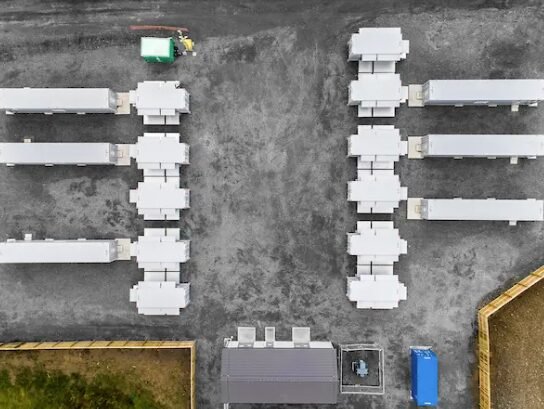
Four existing 220kV overhead transmission lines forming part of the wider National Electricity Market (NEM), which spans Australia’s eastern and southern states and territories’ grid infrastructure, already run through the southern section of the project area.
Construction is anticipated to commence in mid-2027, with a peak workforce of around 75 personnel. The build and commissioning phase is expected to last 24 months, with an operational date targeted for mid-2029. The facility is designed for a 20-year operational life.
Environmental assessment and site selection
Comprehensive environmental investigations completed in April 2025 found no matters of national environmental significance within the project area.
The ecological surveys recorded no threatened species, threatened ecological communities, or listed migratory species within the development footprint under the EPBC Act.
The project area was selected following environmental surveys to avoid direct impacts on MNES and on the preferred habitats of threatened species around Cannibal Creek, while maintaining proximity to existing transmission infrastructure.
According to the EPBC Act application, the site will maintain a minimum 200m buffer from Cannibal Creek, located approximately 250m north of the project area, and from farm dams identified as higher-value habitat areas.
The project area is bounded by agricultural land to the north, east and west, with the Princes Freeway to the south. The site is predominantly characterised by annual and perennial grasses and agricultural weeds, with small, planted clusters of trees present as hedgerows between paddocks and in the freeway road reserve.
Victoria’s storage deployment pipeline
The Bunyip North referral adds to a growing pipeline of battery storage projects navigating Australia’s federal environmental assessment process.
Victoria has legislated renewable energy generation targets of 65% by 2030 and 95% by 2035, alongside energy storage capacity targets of at least 2.6GW by 2030 and 6.3GW by 2035 under the Renewable Energy (Jobs and Investment) Act 2017, as amended in 2024.
Recent EPBC Act referrals in Victoria include a 2GWh project targeting the Moorabool-Mortlake transmission corridor and Revera’s 500MW/2GWh Robertstown BESS in South Australia.
In New South Wales, AMPYR Australia submitted the 375MW/1,500MWh Swallow Tail BESS for Bannaby in the Upper Lachlan Shire, designed as a grid-forming inverter-equipped battery storage system to strengthen the grid through voltage and reactive power management.
Western Australia has also seen activity, with Synergy submitting the 1GW Tathra Wind Farm with 500MW BESS, while Neoen Australia referred the 3.2GWh Bondo wind-plus-storage project.
RES, which established its Australian operations in 2004, manages a portfolio of 2.5GW of renewable energy assets across the country.
The company sold the Tungkillo BESS development project, a 270MW/1,080MWh facility in South Australia’s Mid Murray Council area, to Iberdrola last year.
Interested in Australia? Read Energy-Storage.news’ Energy Storage Summit Australia coverage and related content.