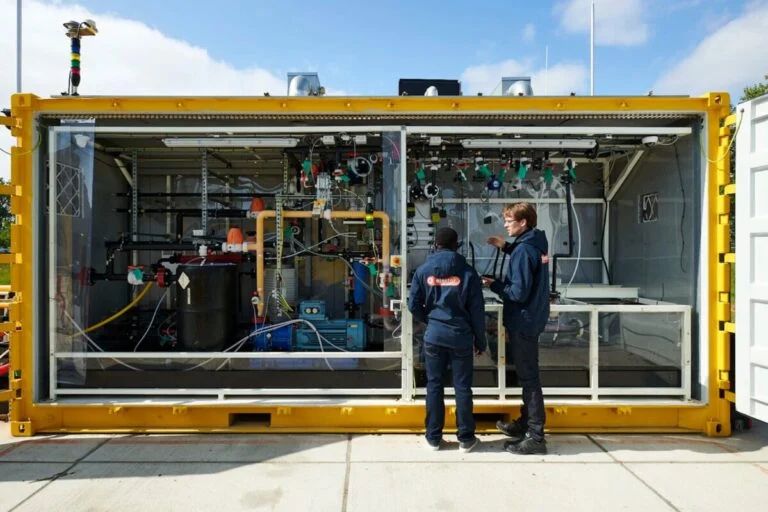
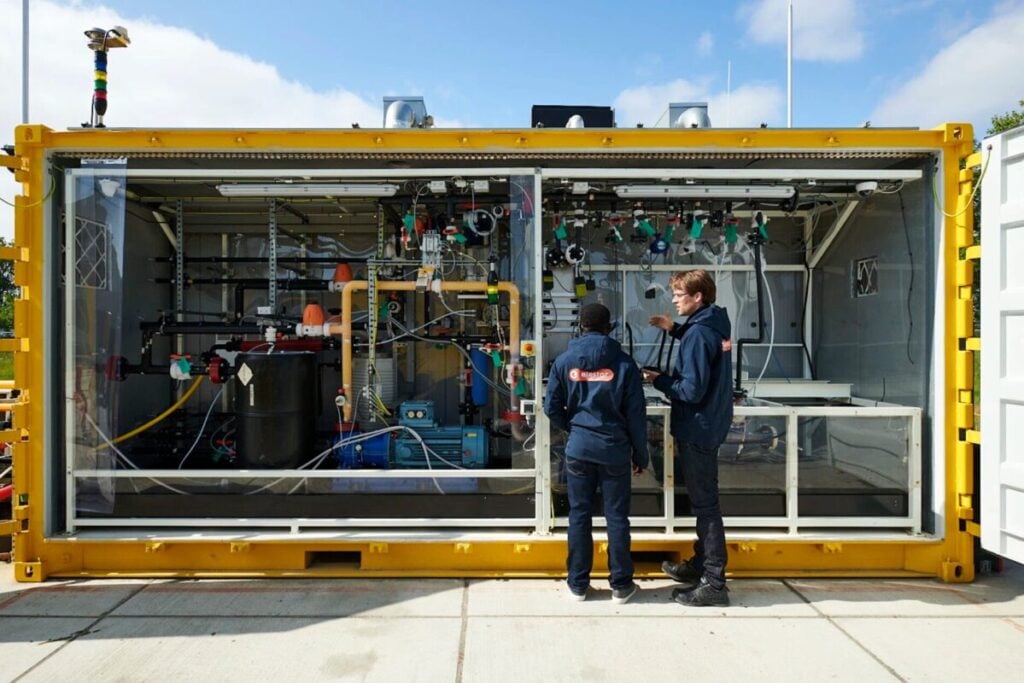
Dutch long-duration energy storage (LDES) developer Elestor has partnered with Windpark Zeewolde to deploy a 20MW/200-800MWh hydrogen-iron flow battery storage system at what is described as Europe’s largest onshore wind farm.
Windpark Zeewolde is a 322MW wind farm located in the Flevoland province of the Netherlands, comprising 222 turbines developed by a cooperative of local farmers and landowners.
Despite generating substantial renewable energy, the plant faces a common constraint across the Netherlands. Grid congestion prevents it from exporting all its available generation during peak periods.
The partnership with Elestor is structured as a phased deployment, with the system scaling from an initial configuration up to 800MWh as the project demonstrates its performance and commercial case.
This article requires Premium SubscriptionBasic (FREE) Subscription
Already a subscriber? Sign In
Try Premium for just $1
- Full premium access for the first month at only $1
- Converts to an annual rate after 30 days unless cancelled
- Cancel anytime during the trial period
Premium Benefits
- Expert industry analysis and interviews
- Digital access to PV Tech Power journal
- Exclusive event discounts
Or continue reading this article for free
Elestor’s hydrogen-iron flow battery technology stores energy in liquid electrolytes held in external tanks, with power and energy components decoupled to allow independent scaling.
That architecture makes it particularly suited to long-duration applications. Energy capacity can be increased simply by adding more liquid electrolyte, an extremely low-cost component, without duplicating the power infrastructure.
The company says its technology can deliver storage durations of 8 to 150 hours, well beyond what 4-hour lithium-ion systems can achieve, and the Windpark Zeewolde deployment will operate in the 10 to 40-hour range depending on dispatch requirements.
The partnership follows Elestor’s €30 million (US$34 million) Series A funding round, led by Equinor Ventures with participation from Vopak Ventures, Invest-NL, Somerset Capital Partners, EIT InnoEnergy and Enfuro Ventures.
Elestor has also received €22 million through the Dutch National Growth Fund’s SLDBatt (Sustainable Long Duration Battery) project consortium, which is focused on scaling long-duration electricity storage technology toward commercial deployment.
Flow batteries in a market dominated by lithium-ion
The Elestor-Windpark Zeewolde partnership sits within a European long-duration storage sector where flow battery developers have struggled to scale commercially despite strong technical arguments for the technology’s role in the energy transition.
As Energy-Storage.news has reported on the mixed fortunes of the flow battery industry, the sector holds genuine potential for long-duration applications but has faced persistent challenges around cost, manufacturing scale and competition from falling lithium-ion prices.
Several flow battery developers have entered administration or restructured in recent years, while others, including Elestor, Invinity and Sumitomo Electric, continue to advance commercial pipelines.
The Netherlands presents a compelling market for long-duration storage given the severity of its grid congestion problem.
The country has seen a rapid expansion of wind and solar capacity, but transmission network expansion has not kept pace, creating bottlenecks that prevent renewable energy generators from exporting available output.
TenneT, the Dutch transmission system operator (TSO), has been actively seeking commercial storage solutions to help manage that congestion. The organisation signed its first controllable congestion mitigator BESS contract earlier this year.
Battery & Energy Storage Tech Europe (BESTE) is Europe’s industrial scaling platform for stationary and industrial battery applications — not EVs. Taking place 8–9 September 2026 at Fira de Barcelona, BESTE brings together utilities, IPPs, energy-intensive industries, data centres, ports, rail, maritime, defence and aerospace OEMs — all deploying or integrating battery storage at scale. Over 100 companies already confirmed — including EDP Renewables, Acciona, Endesa, Naturgy, Neoen, Galp, Basquevolt and Veolia — alongside 40+ expert speakers and international institutional support from BEPA, BVES, LDES and Volta Foundation. Where Europe’s battery & ES ecosystem turns projects into reality.
You can expect to meet and network with all the key industry players again in 2025 from major US asset owners, operators, RTOs and ISOs, optimizers, software and analytics providers, technical consultancies, O&M technology providers and more.
The Energy Storage Awards (ESAs) aim to reward excellence and hard work in the European industry, recognising the pioneering spirit and dedication to positive change it represents. Now in their fourth year, the Energy Storage Awards are brought to you by Solar Media, publisher of global energy storage industry website Energy-Storage-News, and host of events including the Energy Storage Summit series in the UK, US, Asia and Australia.
Battery Asset Management Summit Europe is the annual meeting for owners, operators, investors, and optimisation specialists working with operational BESS assets across the continent. The Summit focuses on how to maximise performance and revenue, manage degradation, integrate advanced optimisation software, navigate evolving market and regulatory frameworks, and plan for repowering or end-of-life strategies. With insights from Europe’s most active storage markets, it equips attendees with practical guidance to run resilient, profitable battery portfolios as the sector scales.
battery, Elestor, energystorageeu, EnergyStorageEurope, europe, flow batteries, flow battery, hydrogen, hydrogen-iron flow battery, ldes, long-duration, long-duration energy storage, netherlands
Read Next
Developer New Leaf Energy withdrew its application for a battery energy storage system (BESS) in Santa Cruz County, California, US, choosing to seek approval through the California Energy Commission (CEC).
L-H Battery Company commenced lithium-ion (Li-ion) cell production at its Jeffersonville, Ohio, US plant this month, for automotive and stationary power applications.
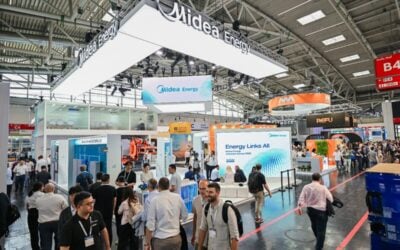
Energy-storage.news spoke with Gerry Liu, GM of Hiconincs, at Intersolar Europe in Munich. We discussed the company’s residential energy offerings and its plans for the European market.
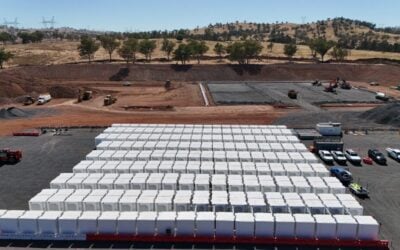
The Australian government has introduced a dedicated First Nations Set Aside pilot into both Capacity Investment Scheme Tenders 9 and 10.
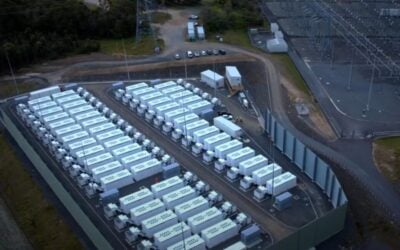
Arash Shojaie of QIC Infrastructure outlines how Queensland’s North West Energy Fund will approach cost reduction, technology selection and more.
Most Popular
