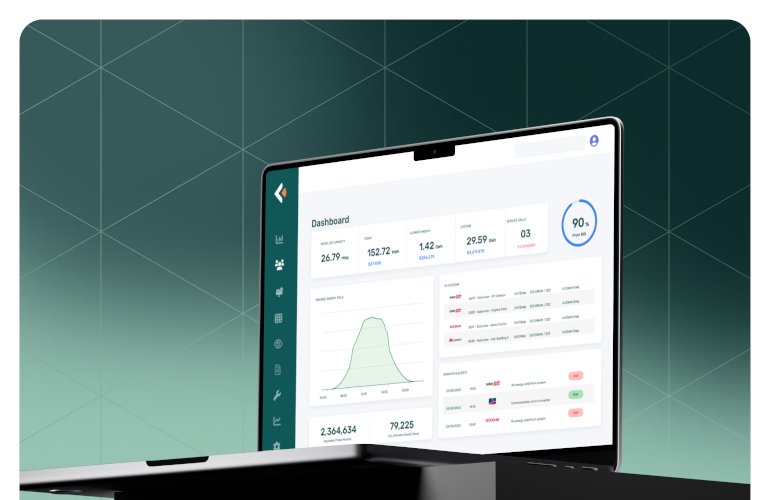
Manual reporting, scattered systems and month-end chaos are quietly eroding margins across clean energy portfolios. Here’s how automated, integrated reporting puts profitability back where it belongs.
With incentives receding, financing tightening and projects taking longer to reach commissioning, solar asset managers and O&M providers must focus on making their existing projects as profitable as possible.
That goal requires unified data management, but legacy asset reporting systems often constrain too many independent power producers (IPPs) and asset managers from managing their portfolios effectively. Most legacy systems worked adequately when portfolios of projects were small, but now with thousands of projects under management, companies must reckon with the costs of relying on older systems, where data is untrustworthy and locked-in to vendors by contract.
Disconnected spreadsheets, static PDFs and the required manual labor hamper flexibility and agility. In short, legacy systems have not kept pace with the complexity of modern asset groups. These liabilities not only affect individual companies’ profitability but the overall viability of the industry itself.
How manual work hurts the bottom line
As portfolios have grown, so too have the size of individual projects, whose geographical locations span regions with different weather and landscape challenges. The more diverse an asset grouping is, the more confusing and challenging a patchwork of legacy systems becomes. Each system contains its own data silo that doesn’t speak easily with other data in the company.
The resulting manual labor necessary to reconcile these disparate data sources takes valuable time away from focusing on performance and injects unnecessary risk into the protocols. Reconciliation has quietly become one of the most expensive hidden processes in renewable asset management. Every spreadsheet, PDF and manual adjustment adds friction, delays decision-making and increases the probability of revenue leakage.
With different pieces of data trickling in from multiple silos — each handled manually at the end of the month — errors in the process are almost inevitable. This means inaccurate invoices, missed service-level agreement (SLA) obligations and delayed payments from customers can erode trust and harm the bottom line. When margins are tight, even small reporting errors compound quickly. Delayed invoices, missed SLA penalties or unclaimed performance incentives can turn operational inefficiency into a material financial risk.
The integration gap that turns reporting into rework
End-of-month reporting or invoicing can be tedious, time-consuming and treacherous to do by hand. Most asset managers would prefer to focus on making their portfolios operate at peak performance instead of toiling over spreadsheets. Automating the process with a modern energy business management platform could save them from the strain and stress of manual reporting particularly as portfolios scale thousands of assets and data points per month.
The human and technical hurdles behind the automation promise
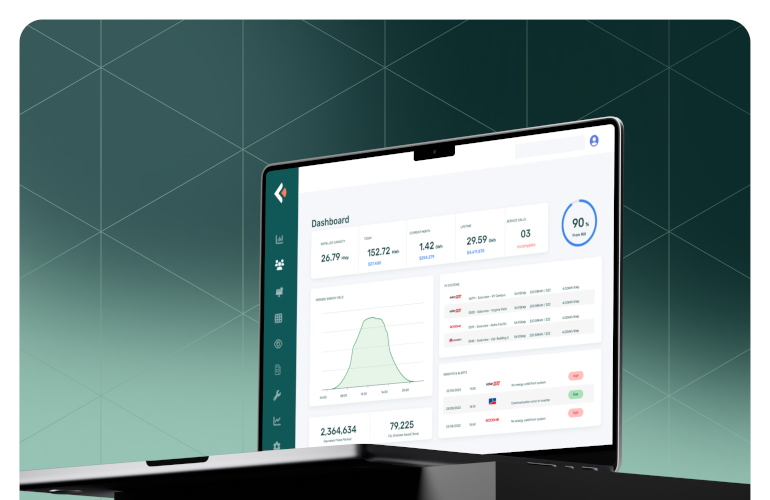 While the shift from manual reporting to automated, AI-driven platforms is an operational necessity, the transition is rarely as simple as “flipping a switch.” The primary challenge lies in data interoperability — integrating fragmented data from diverse hardware OEMs and legacy sensors into a single, clean stream.
Furthermore, technology alone isn’t a silver bullet; it requires a cultural shift within organizations to move away from legacy workflows. Automation provides the “what,” but asset managers still need to provide the “why” — leveraging these insights to drive strategic decisions rather than just replacing one reporting headache with a new digital one. Using innovative energy business management solutions, customers have seen average portfolio performance improvements of 7.5%, driven by faster detection of issues and better prioritization of financially material actions.
Reporting that runs itself — and actually works
The most effective platforms don’t just aggregate reports — they standardize raw operational and financial data at the source. By connecting directly to existing data sources and contract structures without forcing hardware replacement, they create a consistent data foundation that eliminates reconciliation work altogether.
Do stakeholders need to see a profitability snapshot? Managers can generate a report in minutes. Need to monitor SLA performance to prevent missed deadlines and obligations? A modern system offers that information at the touch of a button or automatically through AI-driven workflows. AI-driven diagnostics and root-cause analysis have reportedly helped cut issue resolution time by roughly 50%, preserving revenue that would otherwise be lost to prolonged underperformance. Best of all, these reports can be scheduled to hit stakeholders’ inboxes whenever they need it: daily, monthly or after specific events.
How profitable a portfolio is depends on the details. Automatic reporting can produce fully white-labeled, polished and professional reports without the pain of manual collation. Finally, systems built for today’s portfolios should scale as the portfolio grows — eliminating costly software upgrades or hardware replacements every time the company wants to grow.
Stop fighting data. Start driving performance.
In today’s market, asset managers don’t win by adding more assets — they win by extracting more value from the assets they already operate. That requires moving beyond fragmented tools and toward integrated, automated systems built for scale. Data should no longer be something teams fight. It should be the engine that drives performance, trust and growth.
Legacy systems, while useful when the industry was in its infancy, can no longer do the job. With a single source of truth and fewer moving parts, solar asset managers can focus on what they do best: managing assets at optimum capacity.
In a market where capital is constrained and scrutiny is rising, operational clarity and financial accuracy are no longer back-office functions, they are a competitive advantage.
Alon Mashkovich, CEO and co-founder of enSights, is an entrepreneur with more than 20 years of experience in strategic business development, operations management, energy efficiency, and renewable energy. Previously as a business and energy efficiency consultant, Alon saw the challenges that his clients faced with energy management and optimization, which led him to create enSights with his co-founders. Alon is passionate about helping enterprises in their digital and clean energy transformation.