Three years ago, I outlined why a 100-GW fab dedicated to solar cell production in the United States could be pivotal to the country re-establishing itself as a technology leader — stimulating demand for upstream components such as wafers and polysilicon, and acting as a “depository” of cells for module assemblers.
The article was framed largely as a thought experiment to highlight why solar cell fabrication should be prioritized over module assembly. The Inflation Reduction Act had created a module-heavy incentive structure that largely downplayed the strategic importance of solar cells. A production credit of 7¢/W for modules — compared with 4¢/W for cells — skewed U.S. investments toward downstream assembly rather than technology leadership.
Despite the article being warmly received, I saw little value in revisiting the concept. Then Elon Musk made some interesting comments.
On January 22, during a moderated conversation at the World Economic Forum Annual Meeting 2026 in Davos, Musk generally stated that both SpaceX and Tesla were separately working to build a 100-GW solar manufacturing setup in the United States.
Six days later, during Tesla’s Q4 2025 earnings call, Musk added: “We’re going to work toward getting 100 GW a year of solar cell production, integrating across the entire supply chain from raw materials all the way to finished solar panels.”
So, I’ve decided to return to the 100‑GW concept and develop a model. This article presents the results of that exercise.
Before examining the numbers, it is important to put Musk’s recent comments in context — reviewing Tesla’s previous attempts at solar manufacturing in the United States and the broader class of large-scale, capital-intensive “infrastructure plays.”
What was learned from Silevo?
 Musk’s earlier efforts to build U.S.-based solar manufacturing were also ambitious. The story begins with residential installation company SolarCity, founded in 2006 by Musk’s cousins Lyndon and Peter Rive. Closely integrated with Tesla’s marketing of EVs and charging infrastructure, SolarCity became one of the largest solar installers in the United States, aided by its leasing-led business model — though the company struggled with debt.
Until 2013, SolarCity operated as a pure-play downstream company, sourcing modules from suppliers such as Canadian Solar, Trina Solar and Yingli Green Energy. A strategic pivot upstream followed in 2014 with the acquisition of Silevo Solar, a U.S. start-up developing a variant of the heterojunction solar cell architecture originally pioneered by Sanyo (later absorbed into Panasonic). Focused on n-type cells combined with copper-based metallization, Silevo initially established a 30-MW pilot production facility in Hangzhou, China. Then-Chairman of SolarCity, Musk said acquiring Silevo was strategically essential, citing the risk of constrained panel supply as a long-term threat to SolarCity’s growth ambitions.
Now with Silevo under its control, SolarCity positioned its Fremont, California, facility as the pilot production hub for Silevo’s technology. SolarCity would support a 100-MW pilot line, with an emphasis on validating the copper-plated metallization process.
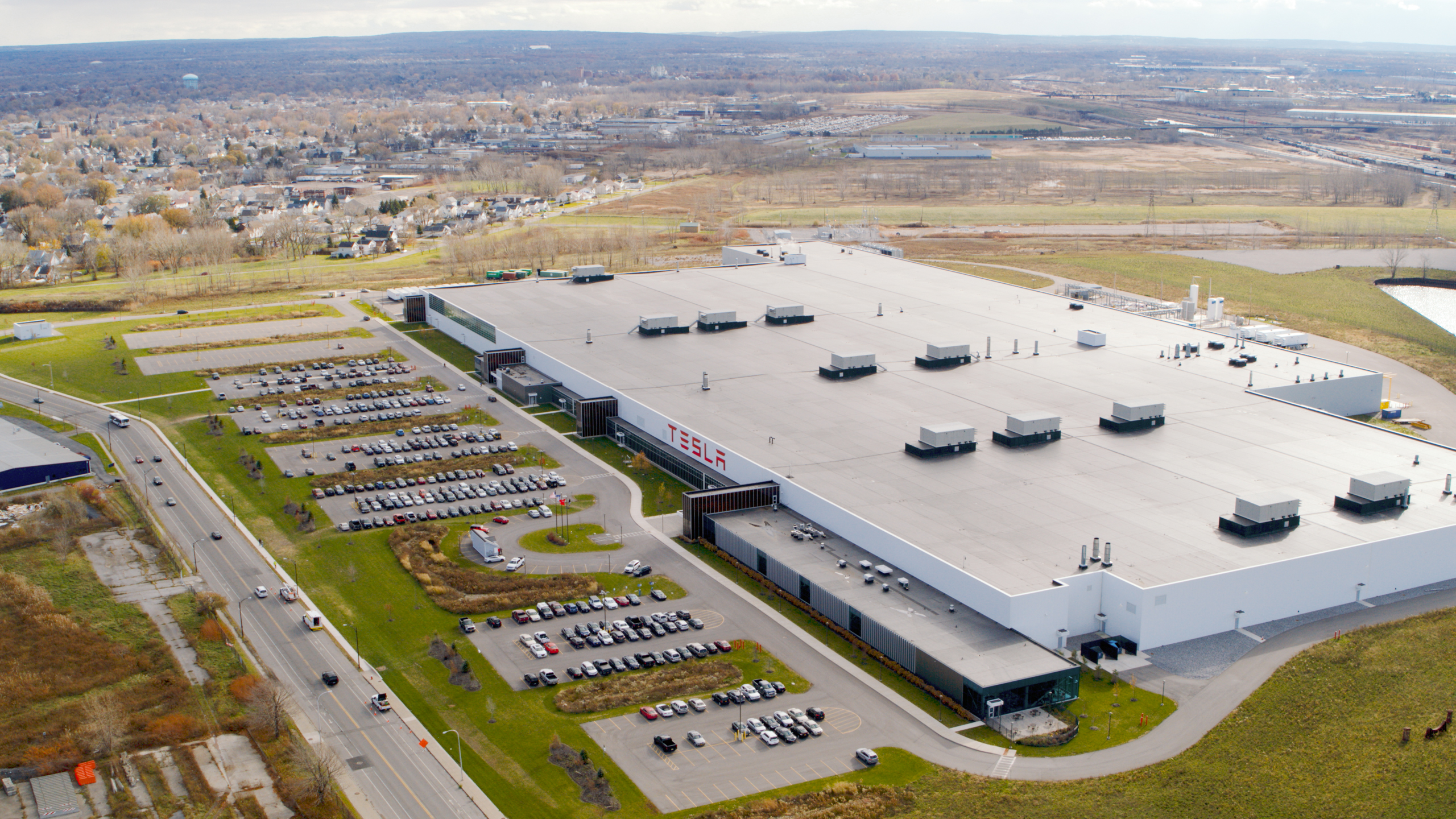
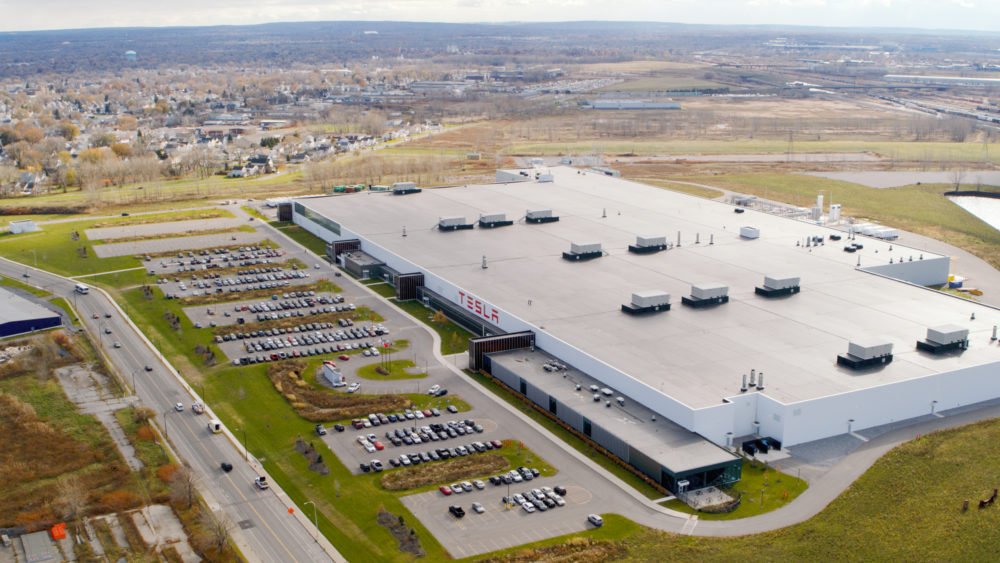
The Tesla facility in Buffalo, New York.
Mass production was later planned for a site in Buffalo, New York, promoted as the largest solar factory in the Western Hemisphere. Targets called for annual production of 1 GW of cells and modules — roughly equivalent to a 10-GW investment in today’s manufacturing “currency.”
By late 2016, following Tesla’s acquisition of SolarCity, Silevo’s technology was effectively sidelined. Tesla instead partnered with Panasonic to operate the Buffalo facility using Panasonic’s solar technology. By 2020, Panasonic had exited the site altogether, and Tesla repurposed the Buffalo facility for EV support.
While the Silevo project is often remembered as a failed attempt to scale manufacturing in the United States, it nonetheless represented a differentiated strategy — ownership of cell processing and engagement with equipment suppliers.
The selection of manufacturing equipment for the Hangzhou and Fremont pilot lines came at a pivotal moment. The first major PV manufacturing downturn of 2012-2014 had reshaped the sector, and the industry was beginning its transition from p-type multi-crystalline cells to mono-PERC architectures.
The plans developed for Buffalo contrasted with global trends in specifying a Western-based materials and equipment supply chain. This included PECVD tools from Applied Materials, PVD and wet-chemistry from Singulus, and copper-plated metallization by BESI/Meco in partnership with MacDermid Enthone. The plans were ambitious and required scaling a bespoke production line with several process steps yet to be proven in mass production.
Capex for a 100-GW factory
There is no shortage of input assumptions when modeling a 100-GW manufacturing facility — whether in the United States or elsewhere. At this scale, every variable is open to debate. However, the decision to proceed reduces to a return-on-investment question. The investment is defined primarily by capital expenditure (capex); the return comes from a combination of net income and the avoided cost of “doing nothing.”
In the model, the project is broken down into three parts. Phase 1 comprises 20 GW of fully integrated ingot-to-module capacity, followed by two expansion phases of 40 GW each. The total capex is divided into two categories: production equipment, and plant and facilities. Estimating equipment capex is relatively straightforward; by contrast, the cost of buildings, utilities and supporting infrastructure is more challenging.

Jinko Solar’s 56-GW ingot-to-module factory in Shanxi, China from February 2024 during the construction process. Credit: YouTube
While there are many examples of partially-integrated investments at the tens-of-gigawatts scale in China, one project provides a credible reference point: Jinko Solar’s 56-GW ingot-to-module TOPCon manufacturing complex in Shanxi, China, constructed during 2023-2025.
Jinko’s motivation for the Shanxi facility was to become the cost and technology leader as n-type TOPCon became the industry’s dominant cell type. The cost of Jinko’s Shanxi facility was cited at approximately $8 billion. Each phase of construction encompassed the full value chain — ingots, wafers, cells and modules — allowing the benefits of vertical integration to be realized from the outset.
It would be imprudent to assume that the 14¢/W figure cited for Shanxi could be directly translated to Tesla’s 100-GW proposal in the United States. In China, projects of this scale are often executed as provincial infrastructure plays, with significant contributions of land, buildings and utilities provided by local authorities. The 14¢/W is best viewed as a proxy for equipment capex rather than total capex.
To adapt this figure for a U.S.-based 100-GW factory in 2026, several factors must be considered. On the positive side, the cost of production equipment has declined significantly since Shanxi was costed, by around 30%. Additionally, the sheer scale of a 100-GW order confers substantial buying power, giving Tesla leverage over equipment suppliers still recovering from the latest downturn in Chinese manufacturing investment.
On the other hand, non-China costs act in the opposite direction. Equipment sourced outside China tends to carry a premium, reflecting both higher base pricing for overseas sales and additional logistics, export and installation costs. Overseas installation is typically more complex, particularly where supplier engagement is not fully captive.
Balancing these factors — including anticipated efficiency gains, learning-curve improvements and incremental yield enhancements over the coming years — I estimate that the realistic equipment capex for Tesla’s 100‑GW factory would be approximately 13¢/W.
Turning to the plant, facilities and supporting infrastructure, it is crucial to stress that recent gigawatt-scale U.S. solar investments cannot serve as reliable comparators. Building a 100‑GW integrated facility in the United States represents a fundamentally new scale of manufacturing investment.
Given the type of facilities required — encompassing advanced cleanrooms, utilities, material handling and end-to-end process integration — and accounting for the lessons learned from smaller, less efficient U.S. projects, I have placed the plant/facilities capex for the 100‑GW factory at $16 billion. At this scale, much of the engineering, procurement and construction (EPC) work would be taken in-house rather than outsourced to third-party contractors, reducing costs significantly.
Looking at the 100‑GW project over a 10-year period, it’s important to include not just the initial build costs, but also ongoing production line maintenance and periodic equipment upgrades. Once these are factored in, the full capex picture comes into focus, setting the stage for the detailed analysis in the model.
Capex phasing and volumes
In this model example, project capex is concentrated over a four-year window from 2027 through 2030, with Phase 1 commencing at the end of 2026. Ongoing maintenance spending begins once production starts (assumed from 2028), while major upgrade capex is concentrated in 2031, after the full 100 GW of equipment has been installed.
The technology roadmap drives this upgrade cycle. The first two phases (60 GW total) are assumed to be built around TOPCon, with Phase 3 deploying back-contact cells. In 2031, the initial 60-GW is upgraded from TOPCon to back-contact, positioning the entire 100-GW facility as fully back-contact from 2032 onward. Incorporating these maintenance and upgrade allocations increases total 10-year capex to approximately $35 billion.

Factoring in maintenance and upgrade spending, the 100-GW project could involve a total capex over 10 years of about $35 billion.
Production ramp and shipments
The next step is to model annual module shipments. The facility is assumed to maintain balanced production volumes across ingots, wafers, cells and modules, although in practice some imbalance is likely. Since the strategic objective of the facility is module shipments, module production is the key metric.
Production begins in 2028, with shipments meaningfully ramping from 2029. By 2031, all phases are operational and the facility approaches steady-state output. Utilization is set to about 90% from 2032 through 2035, with effective capacity rising to 113 GW by 2035 due to upgrades, debottlenecking and process improvements.

The overall capacity is ramped into mass production between 2028 and 2031, with optimum factory yields from 2032 onwards.
Pricing, margins and 45X
To estimate operating income, the module’s average sales price (ASP) starts from a 2026 baseline that reflects premium pricing today for modules with full domestic content. Moderate ASP erosion is assumed through early 2029, accelerating as 100-GW volumes from the new facility enter the market. Over the decade, this results in roughly a 40% decline in pricing.
Production margins remain negative through early 2029 as production lines are installed and ramped. The pivotal year becomes 2030, when gross margins (excluding 45X Advanced Manufacturing Production Credits) reach approximately 20%, gradually improving thereafter.
The 45X credit is the most critical financial lever in the model. With phase-out beginning in 2030 — and complete elimination by 2033 — the facility effectively races against time to maximize output during the peak credit window. Assuming full eligibility across ingots, wafers, cells and modules, cumulative 45X benefits could approach $20 billion, peaking in 2030 before tapering off. Without 45X, the project would likely remain loss-making until at least 2030. With it, the 2030-2032 window becomes the financial inflection point.

The 100-GW facility could be capable of claiming about $20 billion in 45X credits before theses incentives for domestic U.S. solar manufacturing come to an end in 2033.
Capex is depreciated using 20-year straight-line for plant and facilities, 10 years for new equipment and five years for upgrade investments. All funding is modeled at 50% debt, with a 6% interest rate and a 21% tax rate. Reasonable assumptions are made for working capital and other operating expenses.
Sensitivity testing across ±50% changes in capex, ASP erosion and production margins confirms that margins dominate the net income generated — far more than capex variance.

If production margins can be maintained above 20% from 2029 onwards, the 100-GW factory could deliver healthy profits between 2029 and 2032, before 45X production credits come to an end.
Final thoughts
Dramatic implications emerge at the macro level. Using an annual 20% load factor and an optimistic growth in U.S. energy demand over the next decade, the cumulative fleet of modules shipped from the facility could generate about 1,000 TWh annually by 2035 — potentially approaching 15% of total U.S. demand then.
The purpose of building a quick model of a 100-GW factory was to establish a ballpark view of what such a project might look like over a 10-year period. This model is only one scenario among hundreds of possible permutations. Every assumption — from ASP erosion to margins, from 45X phase-out timing to utilization rates — can be debated. And beyond the spreadsheet sit equally important real-world constraints: polysilicon availability, supply chain depth, land use, permitting timelines, labor markets and grid interconnection bottlenecks.
Whether Tesla ultimately pursues a 100-GW solar factory remains uncertain. A few spoken remarks do not constitute a capital commitment. If the concept is real, one would expect formal references in quarterly filings or investor guidance in the coming months.
But what is the cost to Tesla of doing nothing? If Tesla continues to be a buyer of energy through long-term PPAs from third-party utilities or IPPs, it remains exposed to pricing volatility, supply constraints and policy disruption.
If the risk of external dependence outweighs the near-term financial volatility of building in-house generation capacity, then the 100-GW factory stops being a standalone manufacturing investment. It becomes part of a broader infrastructure hedge — a structural move to secure energy autonomy. And this brings us back to what Musk refers to as an “infrastructure play.”