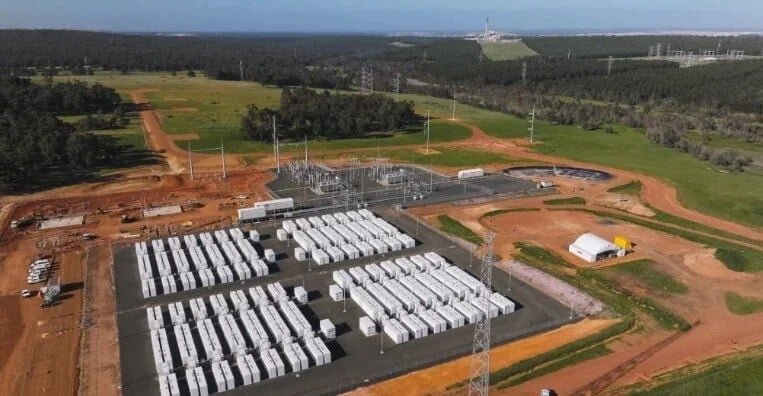
The BESS would include an on-site collector substation with two 330/33kV transformers, associated switchgear and control infrastructure, as well as a roughly 2km-long underground 330kV transmission cable connecting the facility to Western Power’s Palmer Terminal Station, which is currently under construction.
Construction of the cable would largely use horizontal directional drilling techniques to minimise above-ground disturbance.
While the total project area spans close to 180 hectares, the defined disturbance footprint is 98.47 hectares, or around 54% of the site. Within this footprint, the proponent anticipates the permanent removal of several hectares of high-quality foraging habitat for Carnaby’s black cockatoo, forest red-tailed black cockatoo and Baudin’s black cockatoo.
The referral states that although 184 potential nesting trees would be removed, none contain suitable hollows for breeding. The proponent also notes that more than 80 hectares of the site would be retained as an avoidance area, preserving the majority of native vegetation and hundreds of potential or confirmed nesting trees.
Collie set to become a hub for utility-scale energy storage
The Palmer proposal adds to a growing concentration of energy storage infrastructure in Collie, a former coal power hub that has increasingly become a focal point for Western Australia’s energy transition.
Immediately south of the proposed site is Neoen’s Collie Battery, a 2.2GWh system that was switched on in stages and has become one of the largest operational batteries in Australia.
As reported by Energy-Storage.news in early 2025, the project played a significant role in boosting Neoen’s profitability via the Australian portfolio and in supporting grid reliability following the retirement of coal-fired generation in the region.
Neoen reported that its Australia-based energy storage assets drove a 66% year-on-year increase in storage revenue in 2024, with storage contributing €95 million (US$111 million) of the company’s €533.1 million total revenue for the year.
The company attributed much of that increase to stage one of the Collie Battery and the Western Downs Battery in Queensland, helping offset declines in wind and solar revenue.
Separate from Neoen’s project, Collie is also home to another large-scale battery storage development that has attracted federal attention. In 2025, ahead of the federal election, which Labor won, Prime Minister Anthony Albanese visited Synergy’s 2,000MWh battery storage system in a move to emphasise the important role storage and renewables will play in Australia’s future.
CATL, a China-headquartered battery manufacturer, provided its EnerC containerised lithium iron phosphate (LFP) BESS solution to Synergy’s Collie project.
The Palmer Renewable Energy proposal sits within this broader context of rapid energy infrastructure development in Collie, driven by grid connection availability and proximity to existing transmission assets, including the 300MW coal-fired Collie Power Station, which is scheduled to be fully decommissioned next year.
Alongside the utility-scale battery storage projects, Tesla is also exploring a battery re-manufacturing facility that is set to cover its Asia-Pacific operations.
The Energy Storage Summit Australia 2026 will be returning to Sydney on 18-19 March. It features keynote speeches and panel discussions on topics such as the Capacity Investment Scheme, long-duration energy storage, and BESS revenue streams. ESN Premium subscribers receive an exclusive discount on ticket prices. To secure your tickets and learn more about the event, please visit the official website.