The scheme essentially puts the final say-so for permitting in the hands of the Commission, although the process includes local community engagement in its reviews.
Some California legislators have attempted to pass legislation to overturn the CEC’s authority over those approvals.
“The Opt-In Certification programme proves that California can permit critical clean energy infrastructure fast while maintaining rigorous environmental review, public transparency, tribal consultation and community engagement,” CEC commissioner Noemi Gallardo said.
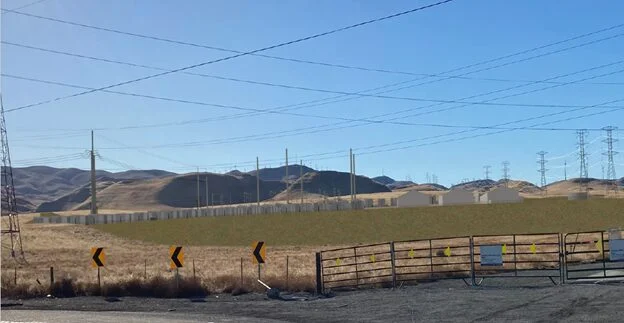
Clearway’s Potentia-Viridi is the third to have gained approval through the programme.
Potentia-Viridi’s original developers, Capstone Infrastructure and Eurowind Energy, submitted the project to the Commission in August 2024 via their 50:50 joint venture (JV) Levy Alameda, LLC, as reported by ESN Premium in October of that year.
The developers later sold Levy Alameda and the project to Clearway subsidiary Renew Development HoldCo in late 2025. This was shortly after the CEC deemed the Opt-In Certification application to be complete, triggering a 26 May 2026 deadline for the decision to be announced, with the programme requiring decisions within a 270-day timeline.
Three out of the first four Opt-In projects approved
As of 23 September 2025, the CEC had deemed four applications complete, details of which were included in another ESN Premium article on the project’s permitting journey.
In addition to the Potentia-Viridi project, these were:
Intersect Power’s Darden Clean Energy Project 1,150MW solar PV and 1,150MW/4,600MWh BESS, which was approved in June 2025.
VC Renewables’ Soda Mountain Solar 300MW solar PV and 300MW/1,200MWh BESS, approved in April 2026.
Engie’s Compass Energy Storage 250MW/1,000MWh BESS. This project drew more than a thousand negative public comments. At an information meeting hosted by the CEC, the Mayor of the City of San Juan Capistrano was among those in opposition.
In late 2025, Engie asked the CEC to pause its review of the Compass Energy Storage project so that the company could assess alternative development sites. The project’s previous owner, Broad Reach Power, had been unsuccessful in requesting a rezoning exemption for the project when it was first proposed in 2022.
However, Engie told ESN Premium in January 2025 that the decision was made “because certain commercial aspects about the current site along with market changes have influenced the economic viability of the Project, requiring us to re-evaluate the location.”
The Opt-In scheme was launched by Newsom as part of an agenda to “build more, faster” in the state. The CEC noted in its announcement yesterday that the three approved projects will add a total 1,450MW of solar PV generation and 1,850MW/9,000MWh of battery storage to support grid reliability.
The trio will also create more than 2,300 construction jobs as well as a few dozen full-time operations and maintenance (O&M) roles, provide over US$3 million in direct community benefits and investments and generate tax revenue for local communities while also creating other economic opportunities.
“Process innovation matters as much as technological innovation, and Opt-In certification is a perfect example of Governor Newsom’s commitment to building more, faster. California’s clean energy goals depend on the state’s ability to responsibly accelerate the delivery of critical infrastructure projects,” CEC chair David Hoschchild said yesterday.