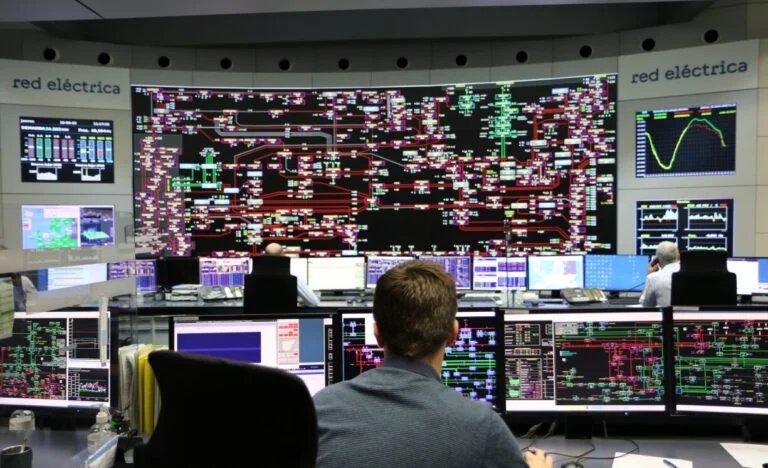
The European Commission has approved a €9 billion (US$10.5 billion) scheme to shore up its energy capacity, which will be open to new and existing projects including energy storage.
The mechanism is akin to a capacity market (CM) and will run for ten years from May 2026 at €900 million a year. It aims to ensure that there is sufficient capacity to produce, store or flexibly consume electricity and that electricity production meets the expected demand.
Under the mechanism, transmission system operator (‘TSO’) Red Eléctrica will remunerate the capacity needed to meet the maximum acceptable hours of lost load per year that the system must meet to ensure adequate security of supply (known as the reliability standard).
It will be open to new and existing projects located in Spain that can provide energy during periods of scarcity, including electricity generation, demand-rise response and energy storage. Winning projects will be selected through transparent and non-discriminatory bidding processes. It hopes to open it up to interconnected Member States at a later date.
This article requires Premium SubscriptionBasic (FREE) Subscription
Already a subscriber? Sign In
Try Premium for just $1
- Full premium access for the first month at only $1
- Converts to an annual rate after 30 days unless cancelled
- Cancel anytime during the trial period
Premium Benefits
- Expert industry analysis and interviews
- Digital access to PV Tech Power journal
- Exclusive event discounts
Or continue reading this article for free
Non-profit coalition Beyond Fossil Fuels said that the auction should be geared to support battery energy storage systems (BESS) and demand side flexibility, and that awarding contracts to gas would be a costly step backwards.
Capacity markets are a common way to grid operators to ensure enough capacity for demand at predicted times of scarcity. BESS and demand side flexibility have been very successful in winning contracts in such auctions in the UK, Belgium, Poland and Italy in Europe, as well as Japan, Australia and the US. Germany is going to launch one soon too. See all our coverage of capacity markets here.
The capacity mechanism will also support the development of flexibility services to help Spain reach its national flexibility target, adopted under its National Energy and Climate (ENCP). We discussed European Union member states’ flexibility target progress with trade body Energy Storage Europe earlier this year in a video interview.
Spain’s large-scale energy storage market was initially kickstarted by its PERTE tender, which provided capex grants to co-located BESS. Some of those projects are already coming online, including four from Iberdrola. Unsubsidised projects meanwhile tend to use long-term tolls to secure bankability (recent ones from IPPs Grenergy and Zelestra are good examples).
The European Commission is the executive arm of the EU.
Held alongside The Battery Show Europe, Energy Storage Summit provides a focused platform to understand the policies, revenue models and deployment conditions shaping Germany’s utility-scale storage boom. With contributions from TSOs, banks, developers and optimisers, the Summit explores regulation, merchant strategies, financing, grid tariffs and project delivery in a market forecast to integrate 24GW of storage by 2037.
Battery Asset Management Summit Europe is the annual meeting for owners, operators, investors, and optimisation specialists working with operational BESS assets across the continent. The Summit focuses on how to maximise performance and revenue, manage degradation, integrate advanced optimisation software, navigate evolving market and regulatory frameworks, and plan for repowering or end-of-life strategies. With insights from Europe’s most active storage markets, it equips attendees with practical guidance to run resilient, profitable battery portfolios as the sector scales.
Read Next

We hear from Christina Hepp, strategy director at battery energy storage system (BESS) owner-operator Green Flexibility, on the big successes and challenges in the German market today.
That’s according to Benedikt Deuchert, head of business development and regulatory affairs for German battery energy storage system (BESS) developer and EPC firm Kyon Energy.
Managers of the UK’s largest BESS owner-operator Gresham House Energy Storage Fund (GRID) discussed recent investment news and future strategy this week.
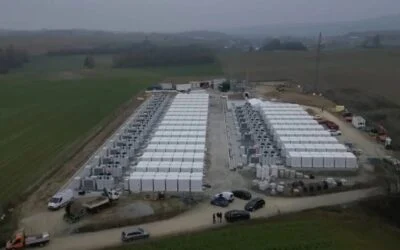
The German network regulator’s decision to maintain grid fee exemptions for battery storage “ensures that billions in private investment remain directed” into the market, Energy-Storage.news has heard.
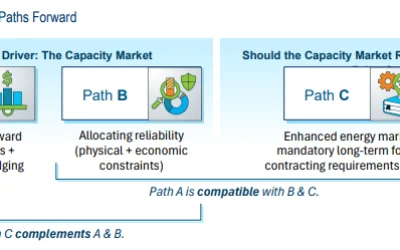
Energy-Storage.news Premium speaks with Brattle Group’s Andrew Levitt and Dr Long Lam, about PJM and managing load growth.
Most Popular
