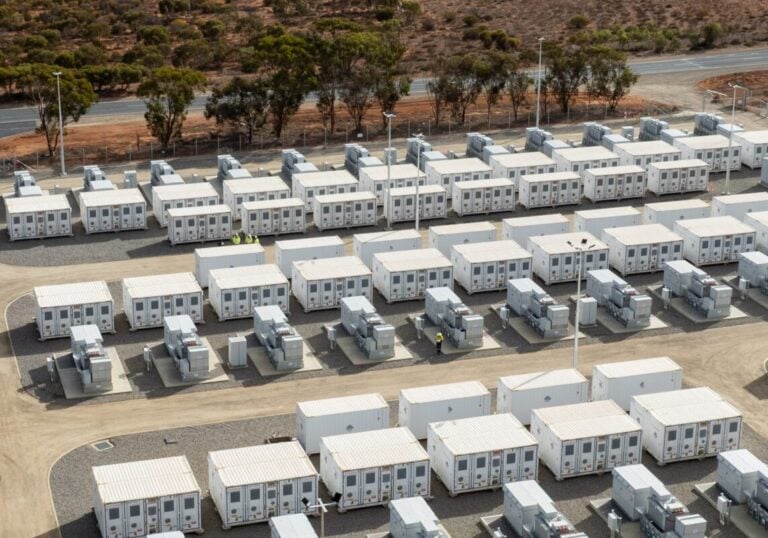
The tender was explicitly technology-neutral, meaning gas-fired generation and pumped hydro were eligible to compete alongside battery storage. None secured a contract.
According to ASL, the tender attracted bids from both battery and gas projects, and the outcome reflects the relative competitiveness of battery projects across all assessment criteria rather than any preference built into the tender design.
“This was a technology-neutral tender, and the outcome reflects the competitiveness of battery projects in this tender round rather than any preference in the tender design,” an ASL spokesperson tells ESN Premium.
“Batteries are well placed to compete under current market conditions, given they can generally be developed, financed and delivered faster than some alternative technologies.”
The result, ASL says, was not unexpected given the success batteries have achieved in similar schemes across the country. But the spokesperson is careful not to read a permanent technology preference into the outcome.
“ASL expects to see a range of technologies successful in future tenders as long-duration energy storage (LDES) projects in South Australia continue to progress their development and seek support under the scheme,” the spokesperson says, adding that gas is expected to be competitive in future rounds as those pipelines mature.
What the 700MW target actually meant
One of the more widely misunderstood aspects of the FERM Tender 1 result is the relationship between the original 700MW target and the 1,334MW that was awarded. ASL is direct in clarifying that these figures are not measuring the same thing.
“The 700MW figure and the 1,334MW figure are not directly comparable, as they refer to different measures,” the spokesperson says.
The 700MW target referred to committed power output, the amount of power each contracted project must be able to dispatch continuously for at least 8 hours during Forecast Lack of Reserve events, the periods of tightest supply-demand balance when the FERM service is required to perform.
The 1,334MW headline figure, by contrast, reflects the nameplate capacity of the winning projects, their total installed power capability, which in practice exceeds the committed output each project must guarantee under its contract.
When measured against the committed output framework, the picture looks different.
“In the November 2028 and November 2029 categories, the tender sought up to 600MW of committed output capacity and ultimately awarded 517MW,” the spokesperson explains.
A third category, targeting up to 100MW of committed output by November 2031, attracted bids, but none ranked highly enough against the evaluation criteria to be selected.
The scheme’s assessment approach, prioritising commercial operability, contribution to system reliability, and value for South Australian electricity consumers, meant some projects did not clear the bar.
Understanding this distinction is important for accurately interpreting the FERM outcome. South Australia has not contracted nearly double its target volume of firm capacity.
It has contracted 517MW of committed 8-hour output, with the 1,334MW nameplate figure reflecting the physical infrastructure the six projects will build to deliver that guaranteed performance.
The FERM Financial Vehicle, established as the counterparty to all FERMAs, is supported by a legislated cost recovery framework.
“The FERM Financial Vehicle is supported by a legislated cost recovery framework established under the National Electricity (South Australia) Firm Energy Reliability and Orderly Exit Management Regulations 2025,” the spokesperson explains.
“The Australian Energy Regulator (AER) determines the amount to be recovered, with those costs recovered through South Australia’s transmission network service provider, ElectraNet.”
The SA FERM Trust holds an A2 credit rating with a stable outlook from Moody’s. The spokesperson says this reflects the strength of the regulatory framework and the reliability of its cash flows, features that together support the Financial Vehicle’s ability to meet its long-term obligations over the full 15-year term of the FERMAs.
The conversion problem
The FERM result lands at a moment when the gap between energy storage contracts awarded and projects that actually reach construction has become a live policy concern across Australia.
The Capacity Investment Scheme (CIS), which operates at the national level, has seen several successful projects struggle to convert their contract wins into Final Investment Decisions (FIDs) due to planning delays, grid connection constraints and financing challenges.
Asked what the FERM Agreement’s design does to address this, ASL is candid about both what the contract can and cannot do.
“The FERM Agreement has been designed by the South Australian government to help address challenges around financial risk and provide projects with revenue support,” the spokesperson says.
“ASL provides commercial advice informed by ongoing market engagement, including on the risk allocation and whether the agreement addresses the investment risks proponents need managed to proceed. Those are important factors in supporting strong delivery outcomes over time.”
But the spokesperson is equally clear about the limits of what the contract can achieve.
“Across all schemes, reaching FID depends on a variety of factors, including planning, financing and grid connection,” the spokesperson notes.
“The scheme does not address all development risks associated with reaching Final Investment Decision.”
In other words, the 15-year FERMA contract can improve revenue certainty and support bankability. Still, it does not remove the planning, connection, or construction risks that have created bottlenecks elsewhere in the Australian market.
A first round with more to come
The FERM scheme was always designed as a multi-round programme. The total volume of long-duration capacity targeted under the framework is 2,300MW across financial years 2026–27 to 2030–31, meaning Tender 1’s 517MW of committed output capacity is a first tranche rather than a final destination.
Further tender rounds are planned, and the experience from Tender 1, including the competitive dynamics, the criteria that separated successful from unsuccessful bids, and the resulting technology mix, will inform how subsequent rounds are structured.
The absence of any successful bids in the November 2031 category is worth noting in that context.
It may reflect a thinner pipeline of projects ready to commit to a later delivery date at the required performance standard, or it may reflect commercial decisions by developers who preferred to compete in the earlier categories.
Either way, ASL’s view is that the scheme is not yet done with alternative technologies. Gas and pumped hydro lost this round on the merits of their bids. Whether the next round produces a different result will depend on how much further those competing technologies have progressed by the time the next tender opens.
For now, ASL’s position is measured: battery storage won this round because it was more competitive across the assessment criteria, the regulatory and financial architecture underpinning the contracts is designed to support long-term delivery, and the conditions that produced this outcome may not be permanent.