For most of the past decade, the solar industry has been focused on deployment. Pipeline and installed capacity were the primary benchmark for success, and the industry delivered. Costs declined, projects scaled, and megawatts grew at a pace few could have predicted. That phase is now maturing, and what is becoming increasingly clear in the field is that the next phase of growth will not be driven by how much solar is built but by how well existing systems actually perform.
This shift may seem incremental at first glance, but it represents a meaningful change in how value is created across the industry. There is a common assumption that once a system reaches commercial operation, performance largely tracks to expectations outside of obvious equipment failures. In practice, most operating portfolios carry a level of underperformance that never triggers alarms but still erodes production over time. These issues tend to present in subtle ways: DC current imbalances across strings that never escalate into fault conditions, voltage mismatches tied to legacy wiring constraints or incremental design changes. Individually, these conditions may not draw attention, but across a portfolio, they become financially material.
The gap between modeled production and actual delivered energy is where a significant portion of unrealized value exists today, and it is driving a change in how asset owners evaluate performance.
Better solar performance starts with detailed data
 The industry has not lacked energy performance monitoring, but it has historically lacked monitoring that translates into operational clarity. Many monitoring platforms are designed to confirm uptime and provide high-level reporting, with alerts that are largely binary and data that is often normalized in ways that remove the underlying signals needed to diagnose performance issues. That approach becomes limiting in a modern operating environment, where understanding how a system is behaving electrically is just as important as knowing whether it is online.
Operators increasingly need access to data that reflects real system behavior, not just summarized outputs. This includes phase-level diagnostics that can identify imbalance before it propagates and comparative analytics across similar assets to isolate abnormal performance. The objective is not to generate more data but to make existing data usable in a way that supports faster and more accurate decision-making in the field.
A significant portion of the challenge lies in integration. Most portfolios are not homogeneous; they are made of different inverter manufacturers, legacy equipment and communication architectures that were never designed to operate together. Many of these components function within proprietary environments that limit access to critical data, resulting in inconsistent structures, latency and gaps in visibility. In practical terms, operators are often forced to rely on multiple interfaces that do not provide a cohesive view of system performance. Addressing this issue requires more than a software solution. It requires an engineering-driven approach to accessing, normalizing and validating data across disparate systems while preserving its integrity.
Democratized data drives decision-making
At the same time, the market itself is maturing, and that is changing how stakeholders interact. Independent power producers, asset managers and field service teams are now required to operate in closer coordination than in earlier phases of industry growth. Performance is no longer owned by a single group; it is shared across organizations that each bring a different perspective, level of technical depth and operational responsibility.
This creates a new requirement for how data is delivered and understood. It is no longer sufficient for a monitoring platform to serve only analysts or performance engineers. The same data must be accessible and interpretable across all stakeholders, from technical teams diagnosing electrical behavior to asset managers focused on financial outcomes. More importantly, it must tell a consistent story. When that story is fragmented, decision-making slows and accountability becomes diluted. When it is unified, stakeholders can move more quickly and with greater confidence, because they are working from the same understanding of what is happening in the field.
This dynamic becomes even more important as systems themselves grow more complex. Solar is no longer operating in isolation, particularly in commercial and industrial environments where storage, load dynamics and grid interaction are increasingly part of the equation. A system may appear to be underperforming when it is actually being curtailed, storage dispatch may alter the apparent behavior of a PV system and load-side conditions can create signals that resemble generation issues. Without a unified view of the system, it becomes difficult to distinguish between true faults and normal operating conditions.
Adapting for stronger solar performance
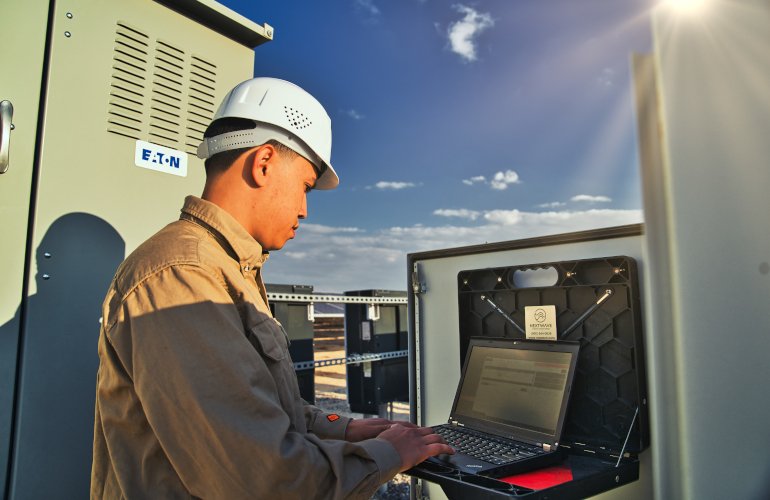
Performance is no longer a passive outcome but an active discipline that requires coordination between monitoring, engineering and field operations. Organizations that are adapting effectively are using monitoring not as a standalone reporting layer, but as a tool to inform how they dispatch technicians, prioritize maintenance and incorporate real-world performance data into design and repowering decisions. Over time, this results in more predictable system behavior and tighter performance across portfolios.
For example, one portfolio operator recently identified recurring underperformance across several of their sites after implementing a more granular monitoring strategy. Unified data access between asset management, engineering and field operations teams gave them new visibility into their assets. By correlating inverter fault history and monitoring data with technician observations in the field (e.g., repeated nuisance trips and heat-related electrical issues), the operator identified a systemic problem that had previously been treated as isolated events, ultimately improving performance across portions of the portfolio by double-digit percentage points.
The industry will continue to add new capacity, but the more immediate and scalable opportunity lies in improving the performance of existing assets. Even modest gains can have a meaningful impact. A 1-2% improvement in energy yield across a large portfolio can translate into significant financial value, often with far less capital investment than new development.
Achieving the next phase of solar industry progress will require better data, deeper engineering insight, and a more disciplined approach to performance than has historically been applied. It represents a different kind of growth, but one that is within reach.