Safe harbor isn’t just a compliance exercise. It’s the single most effective move an EPC, developer or asset owner, can make right now to lock in a stronger competitive position through 2030. Act on or before July 4th, 2026, and every project in your pipeline could qualify for at least the 40% ITC, including the domestic content adder. Here’s what you need to know.
By Kleber Facchini, Director, C&I Products & Applications, SolarEdge Technologies

In commercial solar, margin is everything and right now there’s a window to build a structural pricing advantage that lasts through 2030. EPCs, developers and asset owners who establish beginning of construction (BOC) on or before July 4th, 2026, can lock in the 40% investment tax credit (ITC) including the domestic content adder across their entire project pipeline and retain the flexibility to place those projects in service before 2031.* That translates directly into lower project costs, better returns for asset owners, and a competitive position that peers who miss the deadline simply cannot match.
The numbers make the case plainly.
*Depending on projects fulfilling all ITC requirements and thresholds.
Why Safe Harbor Matters
On a typical carport or ground-mount system, the 40% including the domestic content adder is worth roughly $1.00 per watt net — a margin advantage competitors who miss the deadline will not have. Miss beginning construction by July 4th and projects face a hard December 31st, 2027, placed-in-service cliff. Miss that, and the credit disappears entirely.
The Three Legal Pillars You Must Get Right
Beginning of construction (BOC) is the foundation everything else rests on. Your BOC date determines whether your project is tax credit eligible, whether the Prohibited Foreign Entity (PFE) requirements for material assistance apply, what domestic content ratio is relevant and how your project gets financed.
There are two paths to establishing BOC: the Physical Work Test under a binding contract which is the date physical work of a significant nature occurs on-site or off-site and that is now the only option for projects over 1.5 MW AC (per IRS Notice 2025-42). Or the 5% Safe Harbor — where at least 5% of the total project costs are paid or incurred by the taxpayer earning the credits.
For projects attempting to qualify using the 5% Safe Harbor, the single most common mistake is assuming the EPC’s equipment purchase by itself establishes BOC. It doesn’t unless specific requirements are met. Sufficient project costs must be paid or incurred by July 4, and the costs must be traceable to the project.
With the right method of accounting, if payment is made by July 4, delivery can occur within 105 days and still qualify for safe harbor. Developers often target incurring 7–8% of project costs rather than exactly 5% to build in a buffer against final project cost variability.
Prohibited Foreign Entity (PFE) compliance has become the number one concern for tax equity investors — and it’s a pass/fail test. For solar projects beginning construction in 2026, at least 40% of manufactured product component costs must come from non-prohibited foreign entity manufacturers (a Material Assistance Cost Ratio, or MACR, greater than 40%). There is no partial credit and no remedy after the fact.
Domestic content is the upside. Clear the PFE hurdle, meet the 50% Domestic Content manufactured products threshold (for a project that begins construction in 2026, that also meets 100% U.S. steel and iron and all other requirements), and you unlock an additional 10% ITC adder — bringing the total credits to at least 40%. The key is to lock in your equipment strategy during procurement.

Photo credit: Solar One
“SolarEdge was one of the few companies to offer a truly end-to-end solution for rooftop and carport projects to secure the 40% ITC including the domestic content bonus — working across racking, modules, and introduced a CPA firm (Novogradac & Company LLP) to perform agreed-upon procedures related to domestic content!
It is a cohesive strategy that allows developers to focus on developing projects, knowing SolarEdge will handle the domestic content piece from step one to the finish line. That was a huge relief, and something we implemented at Solar One across multiple applications”
— Aaron Wilson, CEO, Solar One
5 Steps to Safe Harbor Before July 4th
1. Identify your project pipeline and BOC deadline — BOC on or before July 4th, 2026, locks in a 4-year runway to put the project in service through 2030 and determines which PFE and domestic content thresholds apply.
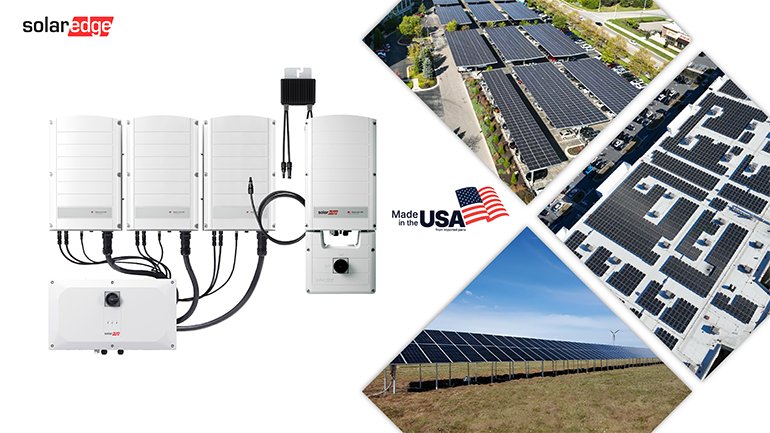
2. Choose your compliance path and specify equipment early — Decide between the 5% Safe Harbor or Physical Work Test (depending on project size), and lock in your equipment strategy simultaneously. U.S.-manufactured inverters — such as SolarEdge’s C&I line, produced at our Florida facility with 4+ GW annual capacity — contribute significantly toward both PFE and domestic content thresholds on rooftop, carport and ground-mount projects, reducing dependency on costly domestic-cell modules.
3. Execute the 5% incurred cost correctly — Generally, the project entity (not the EPC) must pay or incur at least 5% of total project costs, and ensure the equipment and costs are traceable to the project. Target 7–8% for a buffer.
4. Secure financing before the deadline — Options include a 5–10% customer deposit or Sunstone Credit’s Milestone Plus program, which releases a 5% draw to the EPC at contract signing — allowing customers to safe harbor with $0 out of pocket. For purchases over $500K, contact your SolarEdge representative.
5. Document everything and build a defensible diligence package — You need executed contracts, invoices tied to the specific project, proof of title transfer, serial number tracking, chain of custody records, and cost allocation support. Work with a CPA firm to produce an Agreed Upon Procedures (AUP) report that investors and tax equity lenders can underwrite with confidence.
Key Dates at a Glance
| Date | What It Means |
| July 4, 2026 | Safe harbor deadline — BOC on or before this date locks in a 4-year runway to place in service through 2030 |
| Dec 31, 2027 | If you missed the BOC July 4th deadline, your project must establish BOC and then be placed in service by the end of 2027 to get any ITC credit |
| Jan 1, 2028 | No ITC from this point forward if you missed BOC on or before July 4th, 2026 and missed placing in service by end of 2027 — no 30% credit, no 10% domestic content adder |
The window is narrow, but the path is clear. EPCs, developers and asset owners who move now — choosing the right equipment, executing the BOC process correctly, and building a clean compliance package — will be positioned to win business and protect margins for years to come.
Ready to act before July 4th?
Watch the full on-demand webinar: https://event.on24.com/wcc/r/5265594/046FDD6E8312E3A3D576C201AF568CEE
Schedule a meeting with SolarEdge experts: https://marketing.solaredge.com/en-us/hybrid-meeting
Disclaimer: This content is for educational purposes only and does not constitute tax or legal advice. Consult your tax advisor for guidance specific to your projects.
Sponsored Content by SolarEdge