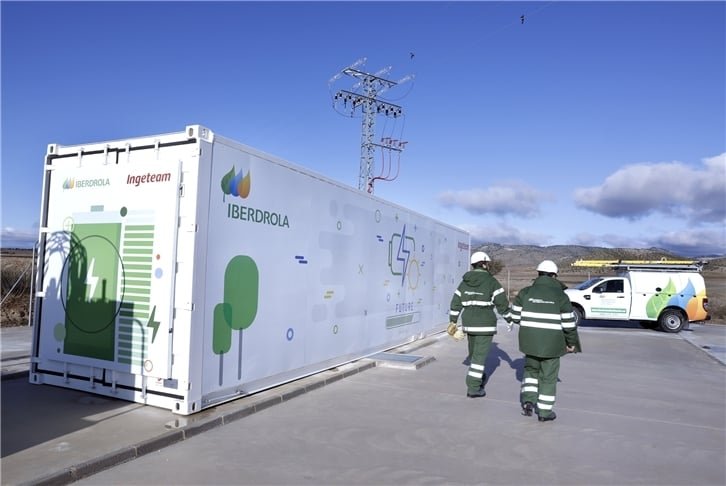
The project will comprise approximately 208 battery containers, 52 associated inverters and transformers, high-voltage transformer equipment, a switchyard, and operations and maintenance buildings.
Each battery storage bank will have a capacity of approximately 5MWh, with the final configuration dependent on the selected battery technology. The project will occupy an 11-hectare development envelope and is expected to operate 24 hours a day with an operational life of up to 35 years. Construction is anticipated to take 18 to 24 months.
TagEnergy Australia acquired the project as part of its purchase of the original proponent, ACE Power. Batteries will be stored in fully enclosed modular containers, with inverters and transformer containers mounted on concrete hardstands to mitigate potential flood risks.
A switchyard will control voltage changes and electricity delivery to and from the adjacent substation, with flood management infrastructure informed by site-specific flood modelling.
The purpose of the project is to store energy from the system during network oversupply and to discharge energy back to the network during periods of peak demand. The battery storage system will also offer frequency control services to the network and improve resilience to variations.
Australian Solar Enterprises’ 400MW/2,000MWh Tumuruu hybrid project approved
Australian Solar Enterprises’ Tumuruu Battery Energy Storage System received EPBC Act clearance on 1 May 2026. The 400MW/2,000MWh project will be co-located with a 400MW solar PV power plant at Taromeo, Queensland, on a 672-hectare property currently used for cattle grazing.
The battery component will utilise 20-foot containers for energy storage, alongside dispersed DC-DC battery systems, inverters, a high voltage switchyard, a site substation, and operations and maintenance facilities.
The total built infrastructure is expected to encompass approximately 286 hectares, with 283 hectares comprising the disturbance footprint and three hectares designated as an avoidance area.
The solar installation will employ a fixed-pitch racking system, with a ground-mounted solution comprising top plates, ground plates, and steel rods approximately 0.9 to 1.2 metres in height.
According to the EPBC Act submission, the system is self-stabilising and does not require concrete foundations or permanent footings, minimising ground disturbance and avoiding underground trenching for mounting structures.
Inverter stations and battery containers will be distributed throughout the site along internal access roads, with the preferred foundation solution being the Stump/Rite mounting system or equivalent engineered screw-pile footing.
Where geotechnical conditions require additional bearing capacity, concrete pads may be utilised at discrete locations, with a minimum footprint.
All construction activities will be undertaken in accordance with best-practice guidelines prepared by the International Erosion Control Association, including erosion and sediment control techniques.
The site is currently cleared and in long-term use for cattle grazing, with all proposed clearing within pre-cleared pasture and high-value regrowth vegetation to be avoided.
An area of Category C high-value regrowth vegetation covering approximately 0.6 hectares is located in the southeastern part of the property and will not be impacted by the development.
Iberdrola submits 270MW/1,000MWh Kingswood project for assessment
Iberdrola Australia has submitted its 270MW/1,080MWh Kingswood Battery Energy Storage System to the EPBC Act referral process.
The project will be located near Tamworth, New South Wales, occupying a 35.58-hectare development footprint within a 79-hectare site at Burgmanns Lane, southeast of the existing Tamworth substation.
The facility will connect to the transmission network via a 33/330kV onsite substation, with transmission connection options including high-voltage above-ground or underground cable alignments or connection to existing overhead transmission lines.
Construction activities will include civil works, the installation of battery enclosures, inverters, transformers, and switchgear, alongside ancillary infrastructure such as operations and maintenance buildings, stormwater management systems, and acoustic barriers.
Two 330kV above-ground transmission lines transect the project area. The battery system, substation and ancillary infrastructure are located outside of these easements, though the proposed transmission corridor running towards the Tamworth substation crosses a 330kV above-ground transmission line easement.
The battery storage system is designed to operate 24 hours a day, seven days a week, with remote monitoring and periodic on-site maintenance. The estimated life of the initial equipment is 20 years, with potential extension subject to the availability of replacement components, component refurbishment, and market conditions.