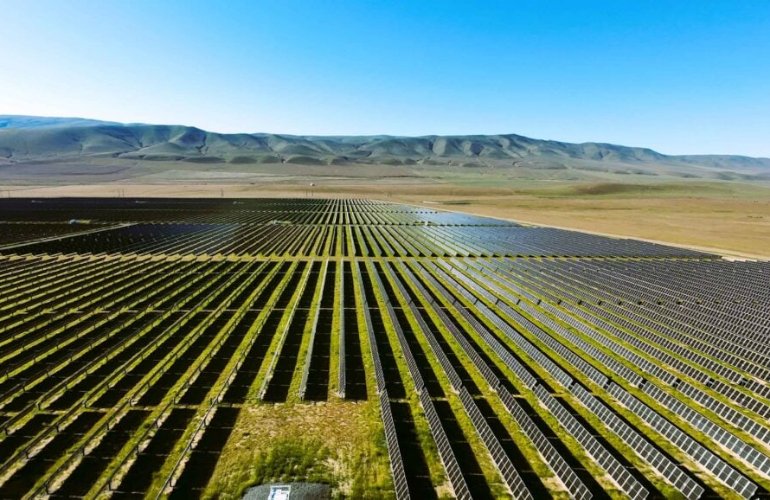
Cypress Creek Energy’s Ostrea Solar project in Yakima County, Washington, has reached commercial operation.
 “Washington’s economy is growing, and that growth requires more electricity,” said Kevin Smith, CEO of Cypress Creek Energy. “Ostrea shows how we can responsibly bring new power online quickly and affordably, while creating lasting benefits for the communities where we operate, and caring for the land for generations to come.”
Ostrea was supported by $180 million in private funds, and nearby headquartered Microsoft is the long-term offtaker of energy and environmental products generated by Ostrea Solar. The project is interconnected to the Bonneville Power Administration transmission system, adding 104 MWDC of new generation to the region’s power system.
Cypress Creek will own and operate Ostrea for up to 40 years, and the company made thoughtful land management and environmental stewardship an important part of the project throughout its operating life. Cypress Creek worked closely with the Washington State Energy Facility Site Evaluation Council (EFSEC) and the Washington Department of Fish and Wildlife (WDFW), including modifying the project design to conserve approximately 275 acres of critical shrubsteppe habitat.
Shrubsteppe is one of Washington’s most diverse ecosystems, providing habitat for species found nowhere else in the state. It is also increasingly scarce, with an estimated 80% of Washington’s historic shrubsteppe lost or degraded to development and agriculture. Cypress Creek also contributed funding to WDFW to support additional conservation work elsewhere in the region.
 Ostrea was also designed with wildlife corridors to maintain migratory pathways through the project area, including for Rocky Mountain elk that move through the region.
Cypress Creek’s stewardship efforts extend to the land beneath and around the solar panels. Portions of the project site include degraded former cropland that has not been actively farmed for more than 25 years and where invasive and non-native plant species had become established. During construction, invasive plants that can threaten native habitats were removed, and disturbed areas were revegetated.
The project was then seeded with carefully selected mixes of grasses and pollinator-friendly flowering plants. Beneath and around the solar arrays, lower-growing species were selected to establish healthy vegetation without interfering with the panels. Other restored areas include taller grasses and flowering species that provide additional habitat and forage for pollinators.
PCL Solar Constructors served as the project’s engineering, procurement, and construction contractor. Construction created approximately 300 jobs, all paid at prevailing wage rates, and included an apprenticeship program that provided opportunities for workers to gain valuable experience and develop skills for long-term careers in the construction trades. Approximately 75 apprentices contributed 39,000 hours to the project during construction.
News item from Cypress Creek